Data Centers: The Real Estate Boom Nobody Expected
AI Is Driving Billions Into Real Estate—But Who’s Really Cashing In?

While the cable news pundits spend all day obsessing over Fed rate cuts and consumer sentiment, the biggest, richest, and most aggressive capital shift in commercial real estate is happening right under their noses. Artificial Intelligence isn't just generating chatbots and tech hype—it requires massive physical horsepower. Server racks, high-voltage substations, industrial cooling systems, and millions of square feet of raw land.
Yet every time a new data center gets announced, the local NIMBY brigade breaks out the pitchforks, screaming about falling home values, ruined landscapes, and skyrocketing electric bills. As usual, the emotional headlines fail to align with the actual data.
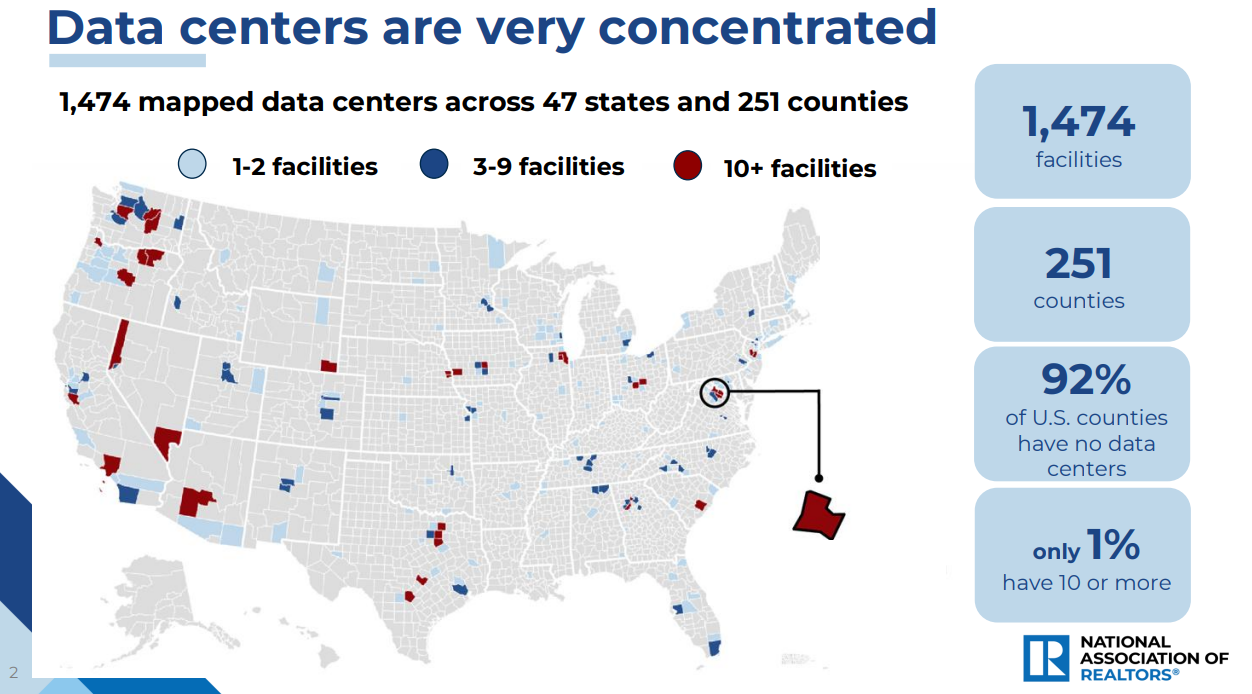
The National Association of Realtors® just released a massive September 2026 study analyzing 1,474 data center facilities mapped across 251 counties in 47 states. The forensic evidence is undeniable: data center hubs aren't destroying communities—they are driving massive tax revenue, lifting median household incomes, and supercharging local property values.
As long as local governments execute proper oversight—enforcing smart zoning, verifying power grid capacity, and managing water cooling resources—data centers are the greatest institutional real estate catalyst of this decade. Here is the breakdown of the numbers.
1. The Concentration Craze: 92% of America Has Zero Data Centers
Despite all the media noise, data center development is hyper-concentrated. Tech giants don't just drop facilities randomly; they hunt for robust fiber infrastructure, cheap industrial land, and heavy power capacity. Out of more than 3,000 counties in the United States, only 1% hold 10 or more facilities.
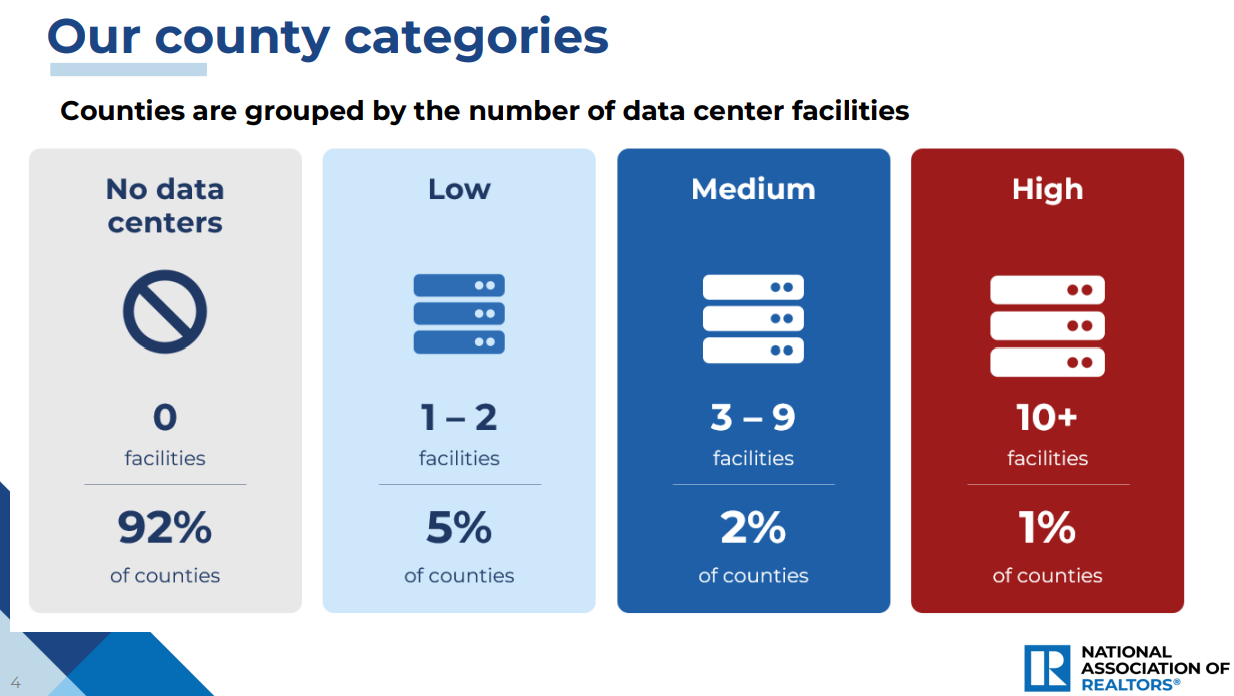
Where are these digital fortresses stacking up?
- Loudoun County, Virginia: The undisputed data capital of the world with 213 facilities—holding roughly 14% of the entire national footprint.
- Santa Clara County, California: 75 facilities embedded in Silicon Valley.
- Maricopa County, Arizona & Prince William County, Virginia: Tied at 63 facilities each.
- Ohio's Mega-Campus Surge: Ohio now holds the largest physical data center campus footprint in America at 63.9 million square feet across 91 facilities, surpassing even Virginia's 57.0 million square feet.
If you own commercial land or industrial property in or near these hyper-growth corridors, you are sitting on prime digital real estate.
2. The Property Value Boom: 2.5x Higher Home Prices
NIMBY critics love to claim that living anywhere near a data center will obliterate residential property values. The NAR county-level data completely dismantles this narrative.
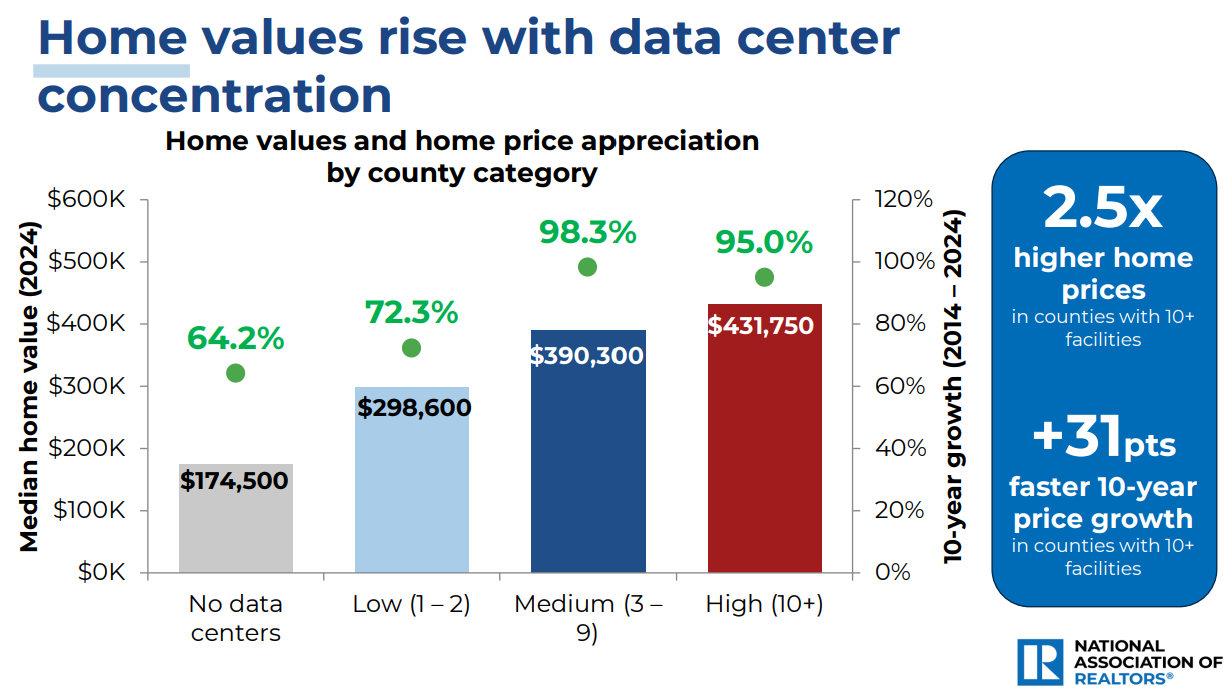
Counties with high data center concentrations (10+ facilities) boast median home values of $431,750—2.5 times higher than counties with no facilities. Over a 10-year tracking period (2014–2024), home prices in dense data center markets grew by 95.0%, outperforming zero-facility counties by 31 percentage points.
Why? Because data centers pump massive commercial property tax dollars into local municipal budgets without flooding the school district with thousands of new students or congesting local residential streets with traffic. That tax windfall funds top-tier public infrastructure, parks, and city services, turning these counties into highly desirable places to live.
Look at the wealth profiles of top data center hubs:
- Loudoun County, VA (213 facilities): Median Household Income = $181,765 | Median Home Value = $743,800.
- Santa Clara County, CA (75 facilities): Median Household Income = $164,281 | Median Home Value = $1,490,600.
3. The Job Machine & The Electricity Myth
Another common misconception is that data centers destroy local economies by straining local power grids and pushing utility bills through the roof for ordinary homeowners.
Employment Growth: 8x Faster Job Creation
Over the 2014–2024 decade, counties with 10+ data centers experienced a staggering 15.6% employment growth rate, compared to a paltry 1.9% in counties with zero facilities—that is 8 times faster job growth.
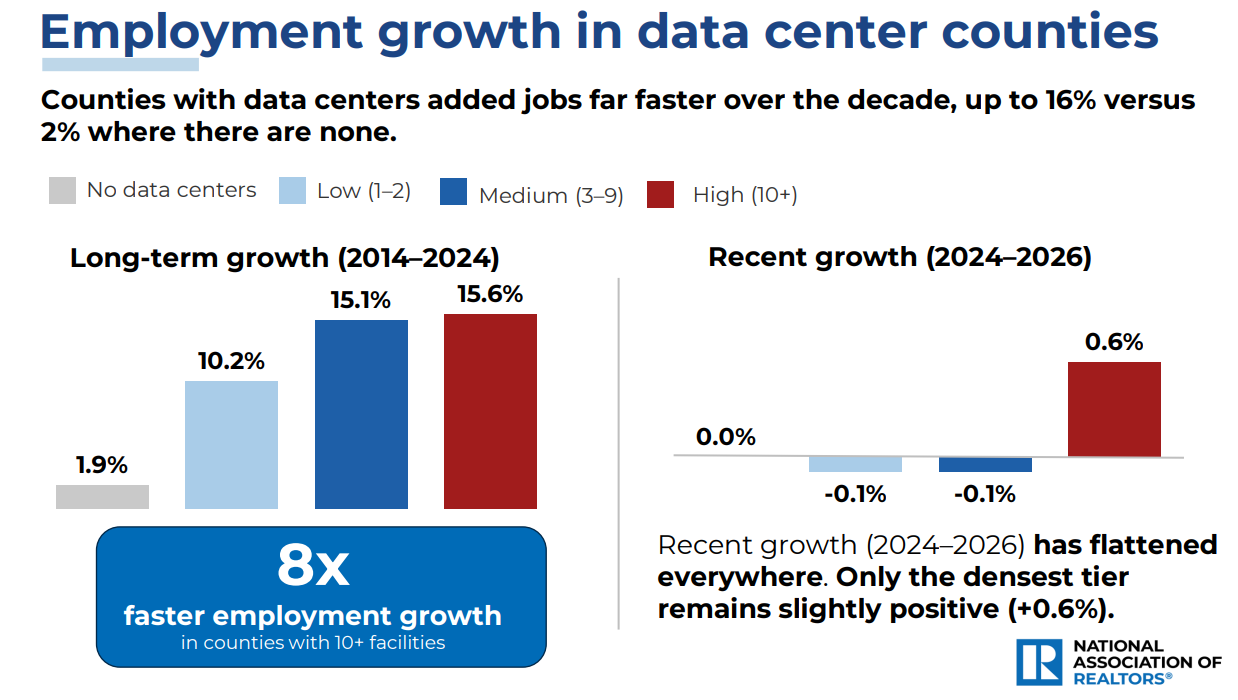
While a completed facility itself runs with a lean engineering staff, the construction, electrical grid expansion, vendor ecosystem, and high-tech corporate relocations create an economic flywheel.
Electricity Costs: The Surprising Truth
Do data centers spike local residential power bills? The empirical data says no.
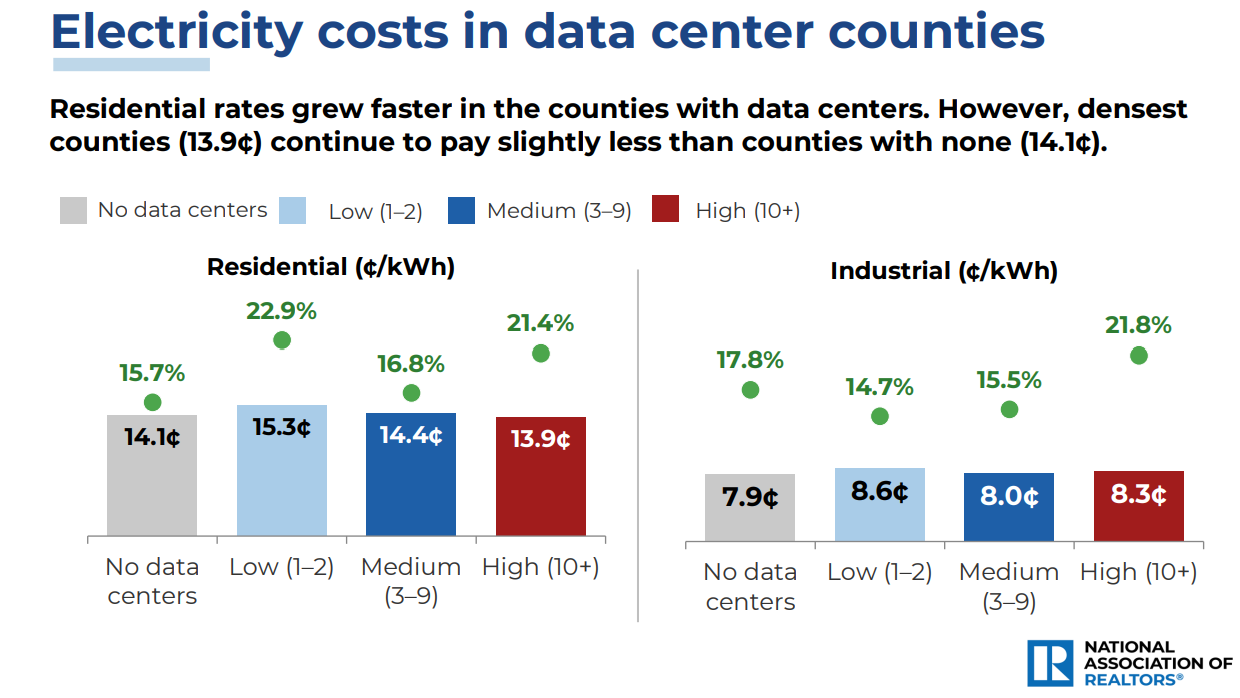
Despite consuming vast amounts of power, high-density data center counties actually enjoy slightly lower average residential electricity rates (13.9¢/kWh) than counties with no data centers at all (14.1¢/kWh). Because industrial hyperscalers pay massive utility delivery fees and subsidize major grid infrastructure upgrades, they help absorb fixed utility overhead that would otherwise fall on residential taxpayers.
4. But aren’t data centers bad for the neighborhood?
There is a national industry aiming to stop the building of data centers, relying on emotional fear tactics rather than attempting to solve the problem.
Look at NPR, they wrote “As data centers spread, not all U.S. housing markets react the same way.”
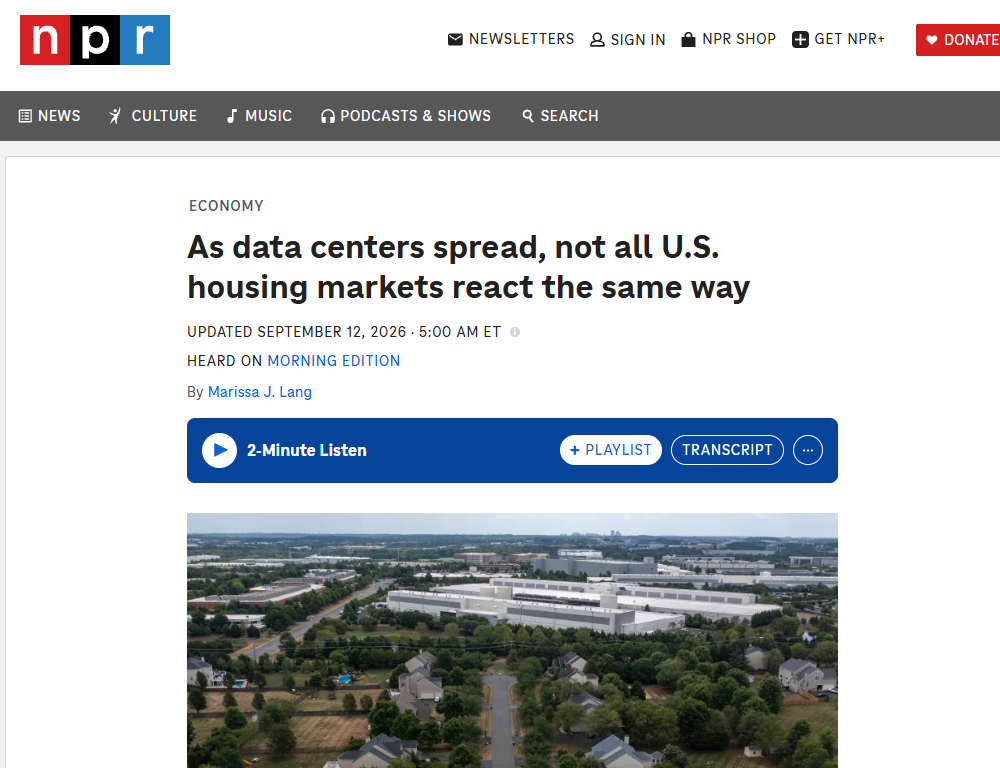
Yet, we not only know that’s true, we know that housing values do BETTER when they are near data centers, and areas preventing data centers are not generating jobs or wealth.
USA Today goes further, warning us that there are revolts happening across the US.
Are there really revolts “across” the US? Or maybe a few spread around the country, fueled by opportunistic bad actors and amplified by bad press, such as USA Today?
Worse yet is CBS News, with their proclamation: The AI revolution is likely to drive up your electricity bill. Here's why.
But as we showed above, the areas with the MOST data centers have the lowest electricity. Here in Los Angeles County, where we are fairly underserved by data centers, the cost of electricity is around 24¢, which is higher than counties with no, low, medium, or high numbers of data centers. Maybe the electricity rates are more complicated than just a data center.
5. The Oversight Mandate: Pro-Growth Means Responsible Planning
Now, let's be completely clear: being pro-data center does not mean giving developers a blank check.
You cannot simply drop a loud, liquid-cooled, 100-megawatt facility next door to a quiet suburban bedroom community without proper guardrails. Municipalities and real estate advisors must demand smart, rigorous oversight:
- Water & Cooling Infrastructure: Facilities using evaporative cooling must be required to utilize closed-loop water recycled systems or dry-cooling technology so they don't drain local municipal aquifers.
- Buffer Zones & Noise Abatement: Zoning boards must enforce substantial setback distances, visual landscaping screens, and strict decibel limits on backup diesel generators and cooling chillers.
- Power Grid Capacity Checks: Utility providers must prove that data center interconnection agreements do not compromise grid stability or emergency backup capacity for local residents.
When local governments enforce intelligent zoning and environmental controls, data centers deliver massive tax revenue with zero impact on local neighborhood tranquility.
The Bottom Line
Data centers represent an unstoppable technological shift. As AI adoption accelerates, the demand for raw computing power, industrial land, and energy infrastructure will continue to outpace supply for the next two decades.
Don't let local fearmongering or ill-informed headlines talk you out of major commercial opportunities. The data proves that well-planned, properly overseen data centers raise local home values, expand the commercial tax base, and drive long-term economic growth.
Whether you are looking to acquire industrial land, reposition commercial assets, or analyze how local zoning decisions impact your residential property portfolio, you need data-driven advice—not guesswork.
Want to evaluate commercial real estate or probate land assets in today's changing market? Call, text, or email me today.
Let's take a look at the news from this week.
My weekly overview of the housing market always starts with a look at the key demand and supply factors fundamental in any economy. The driver of demand is interest rates, and supply is measured by the homes for sale.
This week mortgage rates fell slightly, about a tenth of a percent, closing at 7.48% down from last week’s 7.58%.
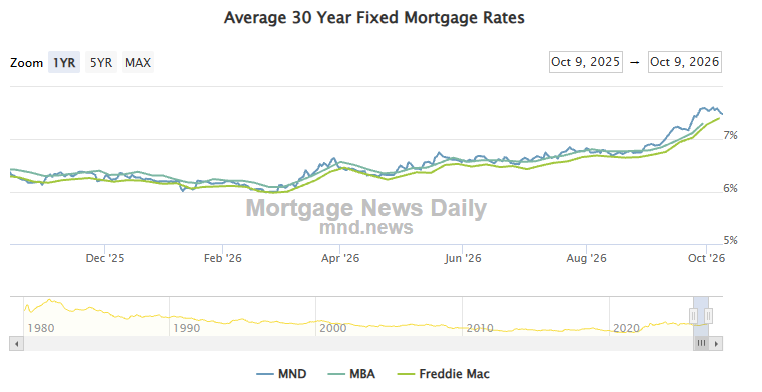
These rates, while causing pain for home builders and 1st time buyers, will not significantly slow purchases as the smaller percentage of the population that can afford to buy a home is doing well.
On the supply side, inventory grew in September to exceed last year's rate by about 2% or almost 21,000 more homes for sale.
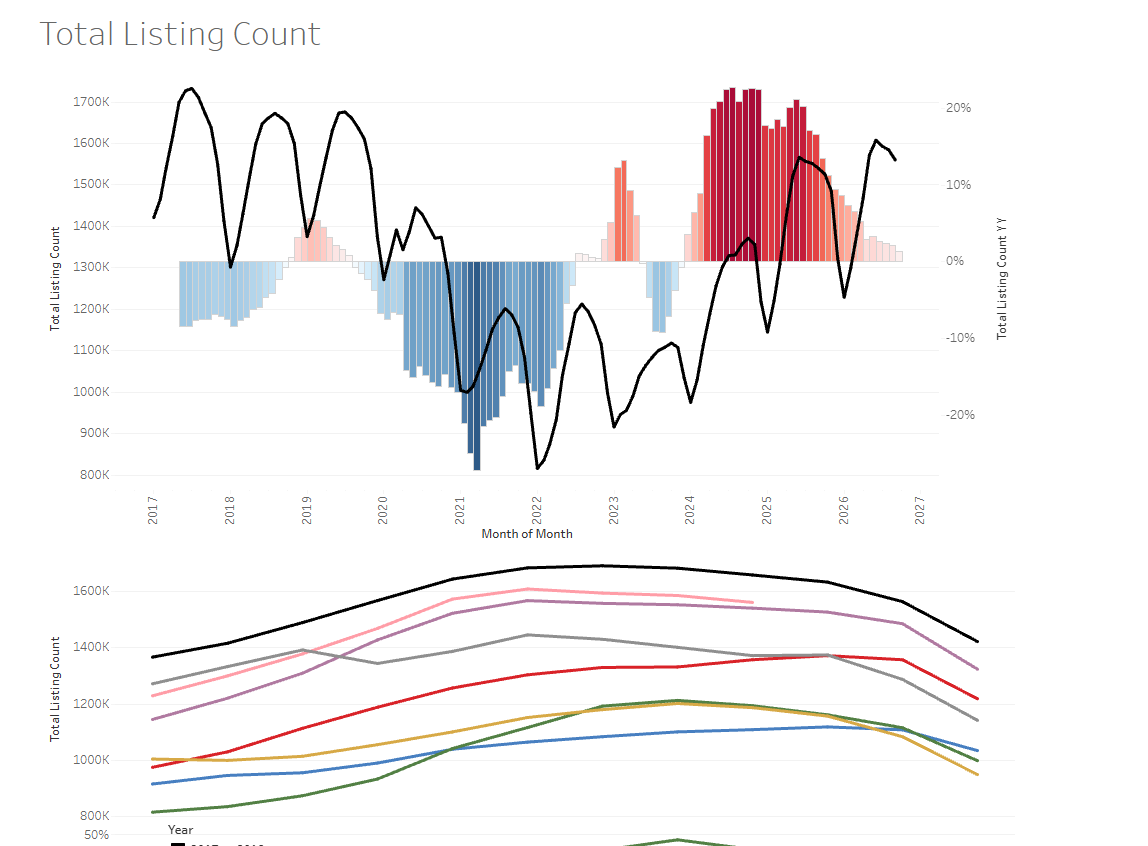
By historical standards, while inventory has increased, it is higher than any COVID year and lower than any pre-COVID year. As long as inventory remains at these levels housing prices CANNOT substantially decrease nationally, and create pressure for more home building.
All real estate markets are locally driven. While there is news nationally, our market is affected by local events and factors. In Los Angeles, our market continues to be slightly favoring sellers, closing again at 35 according to Altos Market Data.
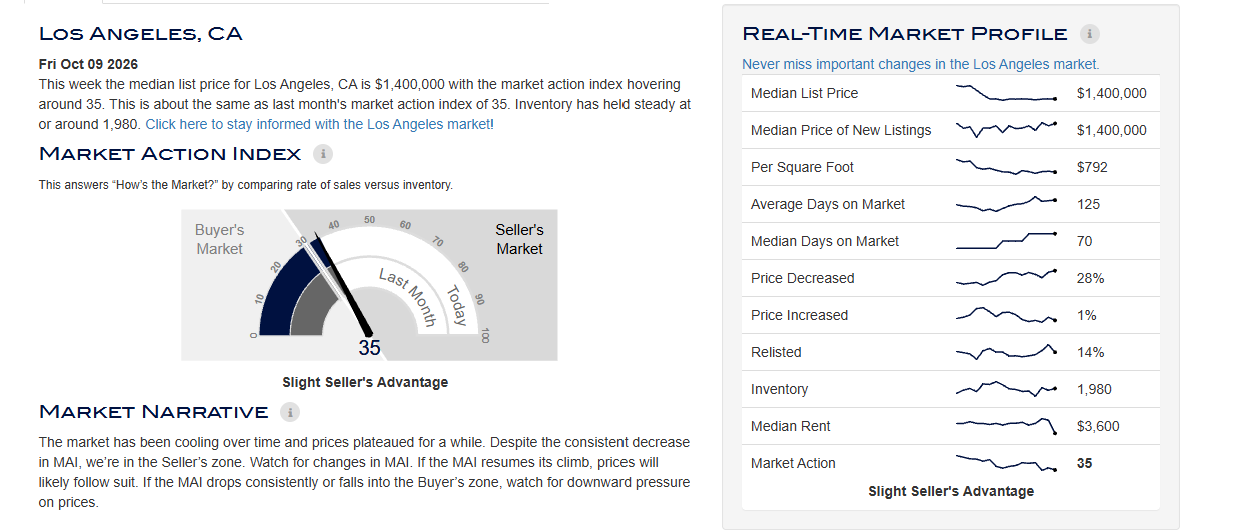
With inventory in Los Angeles growing and price per square foot dropping, this market is finally moving towards a balanced market for buyers just as the interest rates are dropping, making this the best opportunity for buyers in almost a decade.
So, in the news this week…
Artificial Intelligence, or AI, or SI (if you know you know) is transforming the economy right before our eyes. In the local market, a law firm shared last week that they have made tremendous cost savings through their implementation of newer technology, as Keystone Law Group announced savings of over $1.18m annually by implementing the AI-ready project management system Asana.
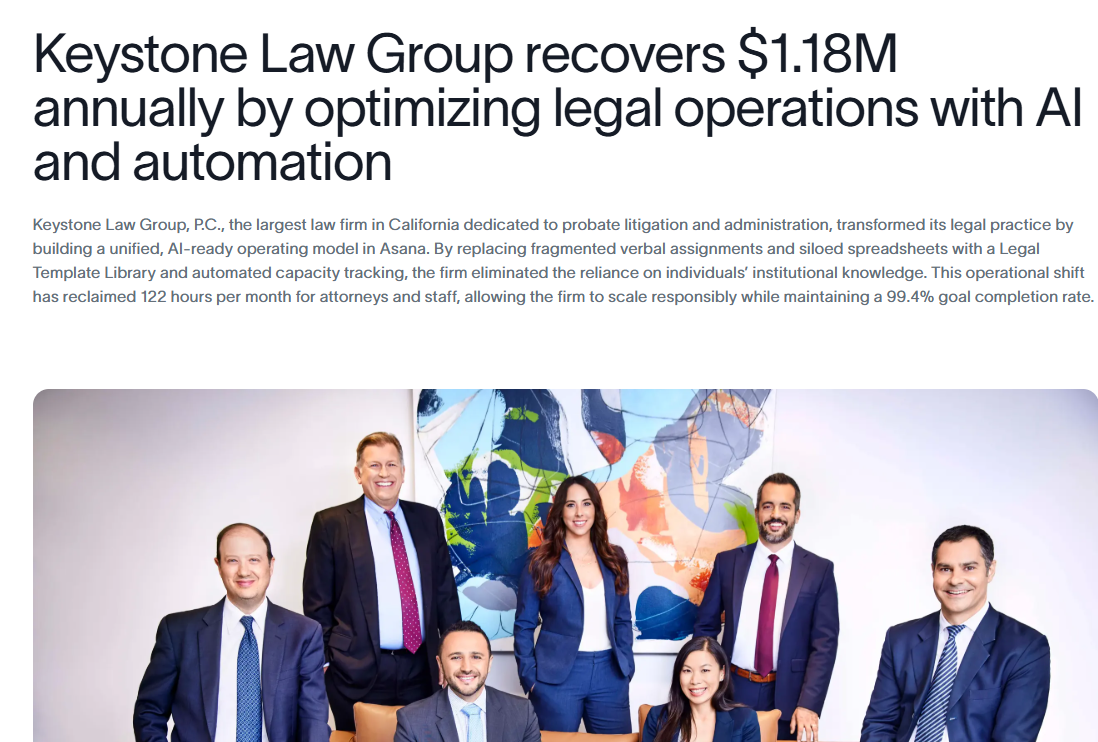
As an 18-attorney law firm, that represents a savings of about $65,000 per attorney, or the cost of an administrative personnel or paralegal? I have experienced similar savings, replacing about 50% of my administrative contract labor and services with AI services. This transformation is real, and it is only going to speed up.
In 2022 Los Angeles started taxing “mansions” with a surcharge on their sales of 4% and higher, designed to raise funds for homeless housing. How did it do? Well, not good.
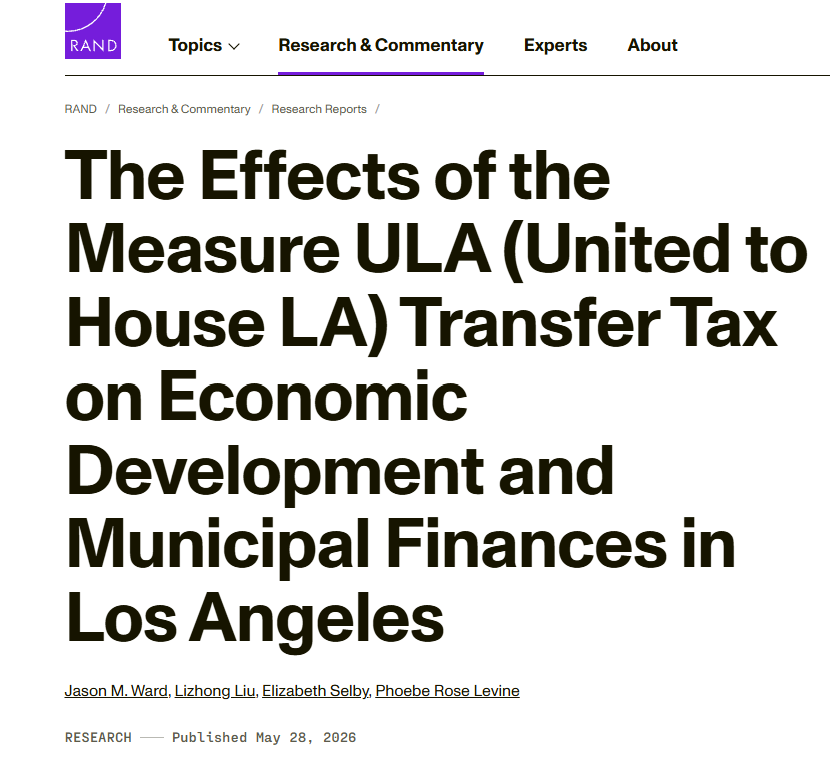
According to the Rand Corporation, Measure ULA has raised $1.2 billion for affordable housing and tenant assistance but has reduced high-value real estate sales by 31% and housing production by over 9,000 new units through early 2026. Forgone revenue to Los Angeles and associated agencies totals $452 million.
How long will it take for the real estate market to return to the levels before COVID? Business Insider, part of the propaganda corps committed to increase renters and help Americans give up on buying a home, says it might be more than a decade for affordability to return to “normal” levels like 2018.
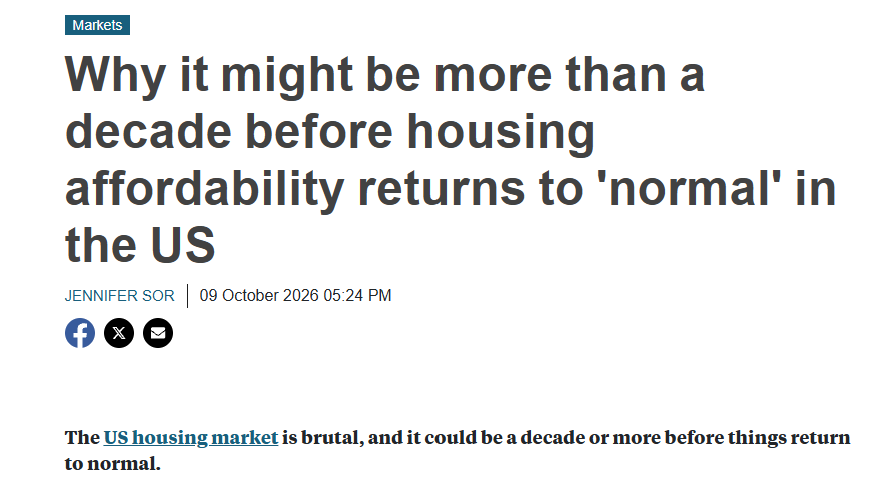
That assumes the trends of the past few years, including inflation, anemic economic growth, and poor job growth, continue. But will it?
One thing that will change is the number of homes being left to families.
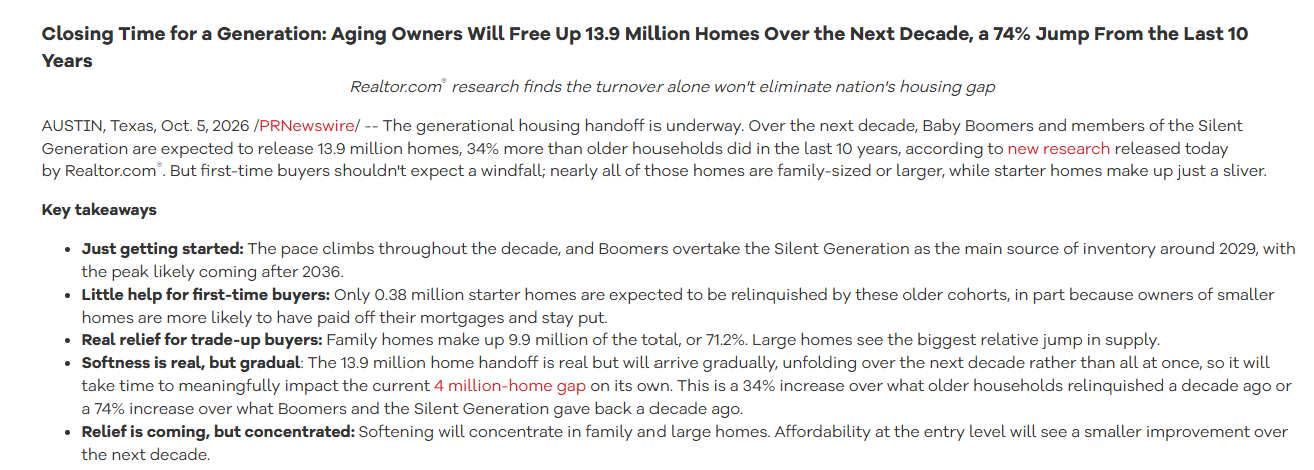
According to statistics by Realtor.com, over 13.9 million homes will be freed up in the next 10 years, 34% more than older households released in the last 10 years, creating more inventory and more opportunities.
So, what should YOU do about buying or selling real estate in today's market?
If you want to move or downsize, it's still a great market to sell, but a bit more challenging than in the last few years.
Finally, if you can find a property that will give you cash flow, this is a great time to get solid cash flow and enjoy the tax benefits of real estate.
How can I help you? Call, text, or email me.
Bill Gross
TheLAProbateExpert.com
(310) 210-0008
bill@thelaprobateexpert.com
Real Estate Broker, DRE #01022275
Bill Gross, The LA Probate Expert, brokered by eXp Realty, 8383 Wilshire Blvd., Suite 800, Beverly Hills CA 90211