Compass Offered Agents $1,000 to Pull Listings Off StreetEasy
Why is Compass offering agents $1,000 to remove listings, and what does it mean for homeowners?

The battle over real estate listings isn't just about technology or competition. It's about who controls the American housing market—and whether independent businesses and homeowners still have a fair chance.
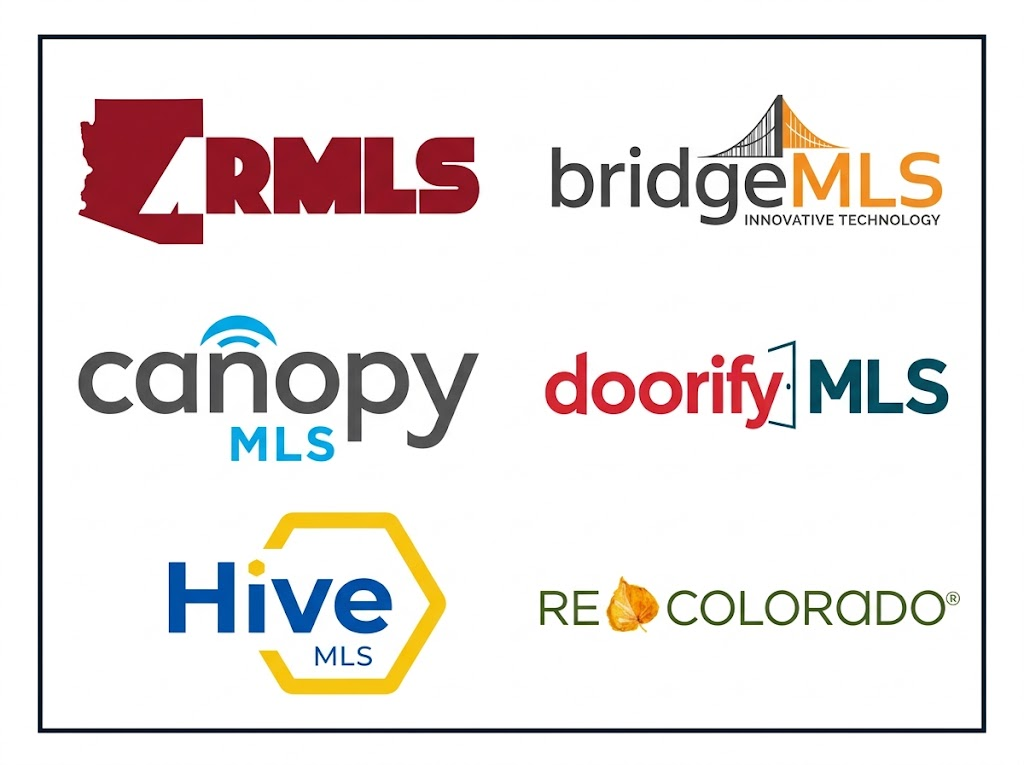
Six regional Multiple Listing Services (Arizona Regional MLS, BridgeMLS, Canopy MLS, Doorify MLS, Hive MLS, and REcolorado) have had enough. They have filed a federal lawsuit against Compass, one of the largest real estate brokerage companies in America.

Selling a home, or an estate or trust property? See what you would walk away with after costs using my free Seller Net Sheet Calculator.
They're asking a judge to uphold their cooperative listing rules and protect them from Compass's legal challenges. In my opinion, they're defending something much bigger than their own businesses. They're defending two fundamental parts of the American Dream: homeownership and the right to build an independent business.
The MLS Is One of America's Great Entrepreneurial Success Stories
Long before Compass existed, long before Zillow, and certainly long before venture capital discovered residential real estate, independent real estate brokers figured out something remarkable. They could compete with one another while cooperating to serve their customers. Instead of keeping every listing secret, brokers shared information so that buyers could see more properties and sellers could reach more buyers. The roots of this system go back to the 1880s, and organized listing exchanges have served American real estate for well over 100 years.

Think about what that means. A small independent brokerage with three agents can compete for buyers and sellers against a company with thousands of agents. A new agent can enter the business without raising millions of dollars from investors. A homeowner can hire the agent they trust without worrying that their property will only be shown to buyers represented by that agent's company. That's not some outdated business model. That's American entrepreneurship at work.
Along Comes Wall Street With a Better Idea—for Wall Street
Compass arrived with enormous financial backing, sophisticated technology, aggressive recruiting, and a strategy built around gaining market share. Nothing wrong with competition. Nothing wrong with innovation. And nothing wrong with raising capital. But there's a big difference between building a better business and using financial power to change the rules so smaller competitors cannot compete on equal terms.

The CEO of Compass complains that every single member of CRMLS’s Board of Directors is a direct competitor of Compass, and they are dictating how Compass and our agents can and cannot compete. Yes, that’s how a membership organization works. And to pick up the challenge thrown down by James Dwiggins, President of NextHome, “If you dislike it so much and want to take legal action against all of them, there’s a simple fix: you and all your agents can leave every MLS in the country. Your issue goes away, and so does the constant criticism about a system nobody is forcing you to be a part of.” What’s ironic is there are many Compass agents that serve on the boards of their local MLS, in fact half of the agents that are directors in my MLS, the Combined Los Angeles Westside (CLAW) are with Compass-affiliated brokers.
Compass also argues that sellers should have more control over how their properties are marketed, including the option of keeping listings within the brokerage before exposing them to the broader market. That's a legitimate argument worth examining. But here's my question: When a brokerage wants to keep valuable listings inside its own network, who really benefits—the homeowner or the brokerage? If the brokerage controls both the listing and access to potential buyers, the economic incentives deserve serious scrutiny.
Here's the Part Wall Street Doesn't Like to Discuss: The Profits
According to Compass's own SEC filings, the company reported net losses attributable to Compass shareholders of approximately $321.3 million in 2023, $154.4 million in 2024, and $58.5 million in 2025. That's more than $534 million in cumulative losses over three years.
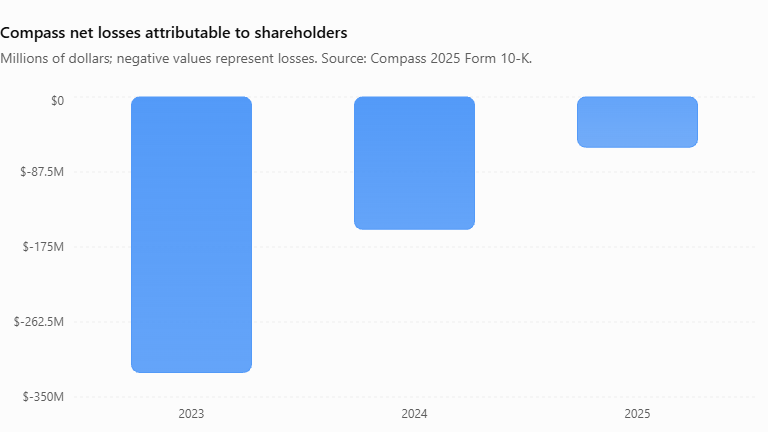
Let that sink in. More than half a billion dollars in reported losses over three years, while the company continues expanding and challenging the rules under which independent brokers compete.
Now, reporting a net loss doesn't mean a company pays no taxes whatsoever. Corporate income taxes, payroll taxes, property taxes, and other obligations are different things. But sustained losses do raise a fair question about the competitive advantage available to a heavily financed corporation that can pursue market share without consistently producing GAAP profits.
Meanwhile, independent brokers have to make payroll, pay rent, purchase insurance, invest in technology, and earn enough money to stay in business. They don't have unlimited access to Wall Street financing. If their business model loses money year after year, they generally don't get to call it a brilliant growth strategy. They go out of business.
Compass Will Pay Agents $1,000 to Keep Listings Off StreetEasy. Whose Interests Come First?
If you think this fight is only about abstract MLS rules, consider what Compass did in New York City.
In September 2026, Real Estate News obtained a Compass email offering its New York City agents a 30-day digital marketing package valued at $1,000 if they removed listings from StreetEasy before the portal's updated listing policy took effect on September 17.

StreetEasy, which is owned by Zillow, had announced that publicly marketed listings would need to appear on StreetEasy on the same day. Compass responded by encouraging agents to remove active and under-contract listings where the seller and agent were comfortable doing so.
Compass also encouraged agents to move certain listings into the Real Estate Board of New York's Residential Listing Service under distribution settings that would keep them off StreetEasy and Zillow. Those listings could still appear on some other portals through REBNY syndication.
Let's be clear about what happened. Compass wasn't simply telling agents to explain the advantages and disadvantages of different marketing strategies to their clients. It was offering agents something of financial value if they removed listings from a major consumer real estate website.
A thousand dollars. To the agent. For removing the seller's property from StreetEasy.
Compass described the incentive as a digital marketing package, not a cash payment. And its instructions referenced seller comfort with the decision. Those distinctions matter.
But they don't eliminate the obvious question: Why is a brokerage financially rewarding its agents for taking listings off a platform that attracts millions of potential buyers?
According to StreetEasy, approximately two million people visit its platform monthly looking for New York City homes. Compass's alternative was a combination of its own website, internal marketing, and digital advertising.
Maybe an individual seller would genuinely prefer that strategy. That's their decision. But shouldn't that decision be made based entirely on what's best for the seller, without the brokerage putting a $1,000 incentive on the other side of the scale?
Imagine an agent who has already advised a homeowner that StreetEasy provides valuable exposure. Now the agent's brokerage offers a $1,000 advertising benefit if the listing comes down.
Has anything changed about the property's value? The buyer pool? The seller's objectives?
No. What's changed is the agent's financial incentive.
I don't know whether any particular agent changed a recommendation because of that offer. The reporting doesn't establish that. But the incentive itself creates an obvious potential conflict that deserves scrutiny.
Compass says its strategy gives sellers more control. Yet here it was encouraging agents to remove listings from a major public portal while offering them a financial benefit for doing so.
That's not my definition of putting the homeowner first. That's putting a corporate marketing strategy into the middle of an agent's duty to the client.
Sources:
Real Estate News, September 16, 2026 |
The Real Deal, August 6, 2026
This Isn't About Protecting the MLS From Competition
Compass would like the argument to be about innovation versus an outdated MLS establishment. I don't buy that framing.
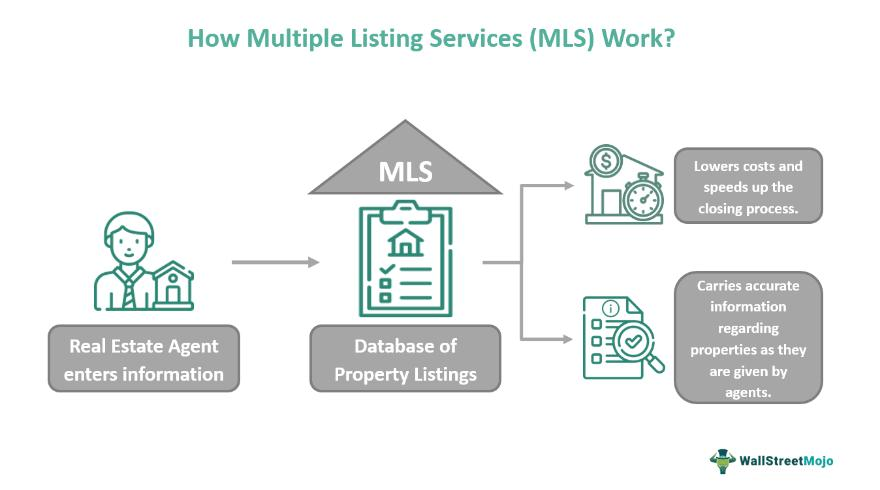
The MLS is itself a competitive innovation. It allows thousands of competing businesses to share information without surrendering their independence. It gives small brokers access to the same essential marketplace information as large brokers. And it gives homeowners the benefit of broad exposure rather than forcing them to depend on the reach of one company.
Of course, MLS organizations aren't perfect. Their rules should be examined, challenged when appropriate, and improved. But the answer to imperfect cooperation isn't necessarily concentrating control of listings in the hands of a few enormous brokerage companies.
A marketplace that gives thousands of independent businesses a fair opportunity to compete is worth defending.
The Real Monopoly Question: Who Controls the Listings?
Compass has not been legally established to be an unlawful monopoly. That is an important distinction. But the direction of its strategy raises legitimate questions about market concentration, control of listing information, and whether independent brokers could eventually become dependent on their largest competitors for access to inventory.

Imagine a market where one dominant brokerage controls a substantial share of the listings and initially makes them available primarily through its own agents. Buyers working with independent agents may have less information. Sellers may receive less exposure. Smaller brokerages may find it harder to compete.
That doesn't prove every private listing is harmful. There are legitimate reasons some sellers want privacy. But a system built around widespread private marketing is very different from allowing occasional exceptions for individual clients.
If Compass's preferred model becomes dominant, I worry that the industry could trade a cooperative marketplace for a collection of proprietary brokerage networks. That would be a remarkable step backward for an industry that spent more than a century making property information easier to share.
What About the Homeowner's American Dream?
For most Americans, their home is their largest financial asset. When they decide to sell, they deserve an opportunity to reach the broadest practical market of qualified buyers.

That principle becomes even more important when the property belongs to an estate or trust. As a probate real estate broker, I work with attorneys, executors, administrators, and trustees who have responsibilities extending beyond an ordinary homeowner's preferences. Their decisions can affect multiple heirs, beneficiaries, and creditors. Marketing strategy matters because the objective is generally to obtain an appropriate market result while fulfilling the representative's legal obligations.
If an agent recommends restricting exposure, I believe the fiduciary deserves a clear explanation of the potential benefits, risks, and alternatives. How will the agent demonstrate that the property received appropriate exposure? How will the estate know whether another buyer might have paid more?
A brokerage's business strategy should never take priority over the interests of the property owner.
Six MLSs Are Standing Up for Something Bigger
The six MLS organizations represent more than 120,000 real estate professionals. Their lawsuit asks the federal court to determine whether their cooperative listing requirements comply with antitrust law. They allege that Compass is pressuring MLS organizations to change rules in ways that would favor Compass and make residential real estate less transparent and competitive.
Those allegations must be tested in court. Compass is entitled to defend its position, and a lawsuit is not proof that either side is correct.
But I believe the principle these MLS organizations are defending is fundamentally sound: Competition works better when independent businesses have fair access to a shared marketplace.
That's how small companies compete with large ones. That's how new entrepreneurs enter an established industry. And that's how homeowners benefit from having thousands of competing professionals working within a cooperative system.
The American Dream Doesn't Belong to Wall Street
America's residential real estate industry was built by entrepreneurs. Local brokers opened offices, hired agents, served families, supported communities, and built businesses that could survive for generations. The MLS helped make that possible.
Compass has every right to compete, innovate, and make its case in court. What it shouldn't expect is for everyone else to accept that its preferred business model is automatically in the consumer's best interest simply because it has the money and lawyers to promote it.
I support free enterprise. I support competition. I support innovation. And that's precisely why I oppose efforts that could concentrate control of residential listings in the hands of a few enormous corporations.
The American Dream has always included two opportunities: the chance to own a home and the chance to build a business.
The MLS system has helped support both for more than a century.
Six MLS organizations are now standing up to defend that system. I think the rest of the real estate industry should pay attention.
Because if we allow Wall Street-financed giants to control who sees the homes and who gets to compete for the business, we may discover that the American Dream has become just another corporate asset.
Let's take a look at the news from this week.
My weekly overview of the housing market always starts with a look at the key demand and supply factors fundamental in any economy. The driver of demand is interest rates, and supply is measured by the homes for sale.
This week mortgage rates fell slightly, a drop for the 2nd consecutive week, closing at 7.33% down from last week’s 7.37%.
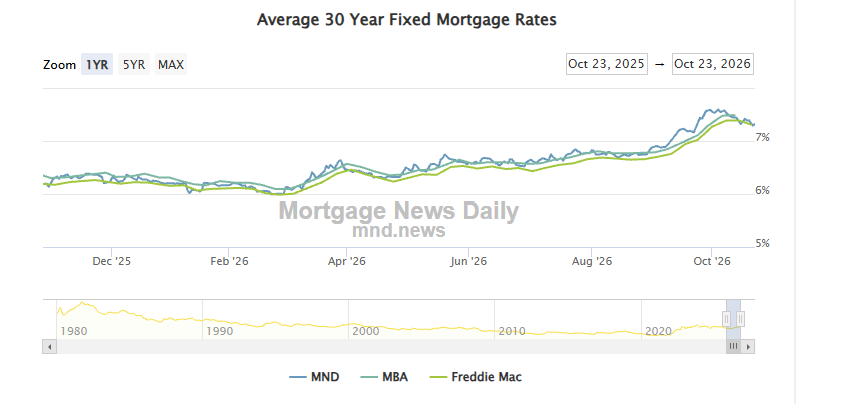
These rates, while causing pain for home builders and 1st time buyers, have not and will not significantly slow purchases as the smaller percentage of the population that can afford to buy a home is doing well.
On the supply side, inventory grew in September to exceed last year's rate by about 3% or almost 38,000 more homes for sale.
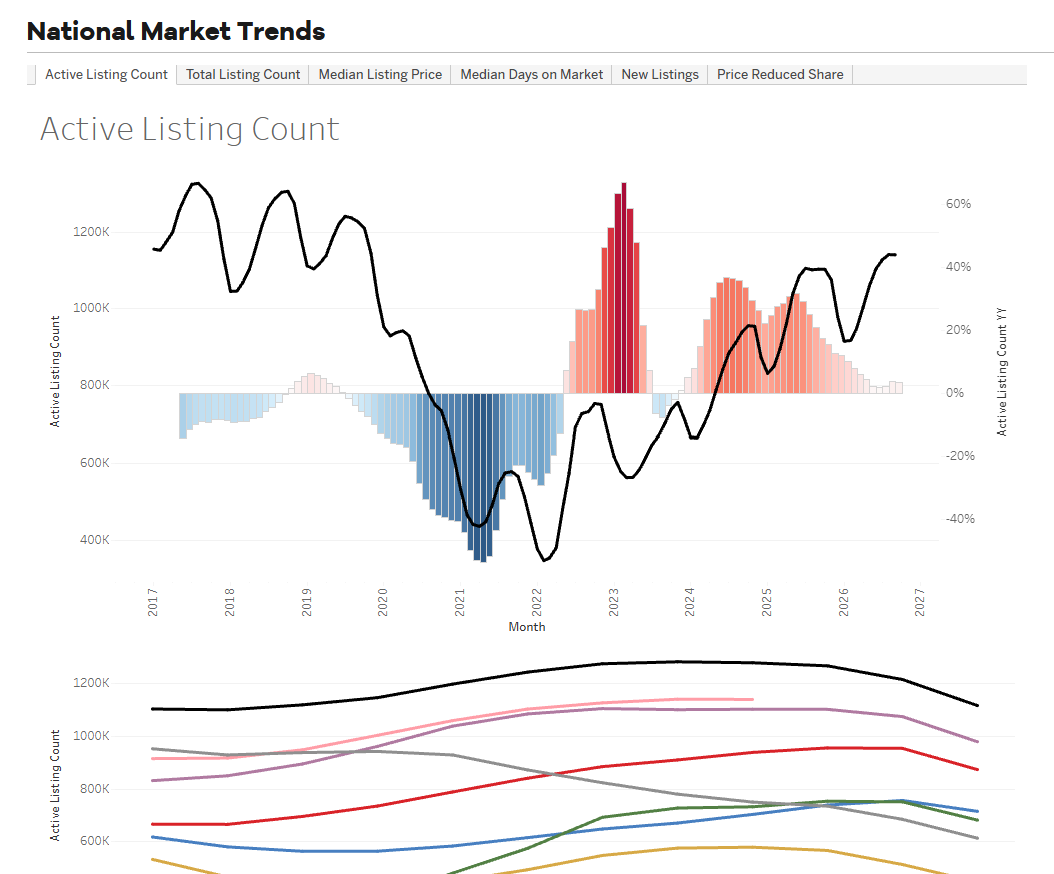
By historical standards, while inventory has increased, it is higher than any COVID year and lower than any pre-COVID year. As long as inventory remains at these levels housing prices CANNOT substantially decrease nationally, and create pressure for more home building.
All real estate markets are locally driven. While there is news nationally, our market is affected by local events and factors. In Los Angeles, our market continues to move slowly towards a balanced market, closing this week again at 34 according to Altos Market Data. This is the closest to balanced the market has been in Los Angeles since before COVID.
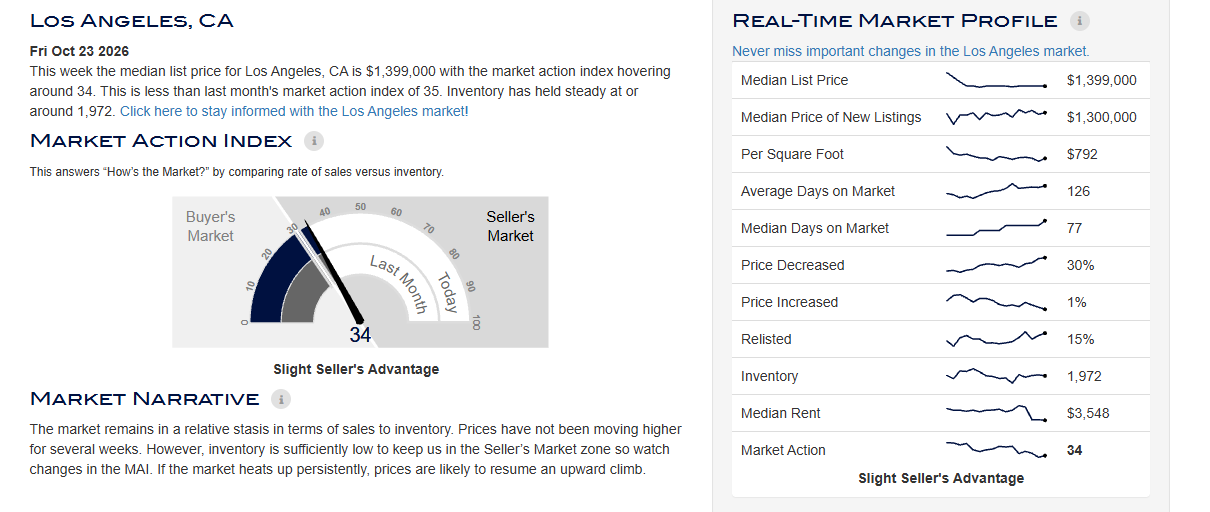
With inventory in Los Angeles growing and price per square foot dropping, this market is finally moving towards a balanced market for buyers just as the interest rates are dropping, making this the best opportunity for buyers in almost a decade.
So, in the news this week…
Found an interesting graph plotting the homeless population against the money paid to non-government agencies, or NGOs, to combat homelessness, and guess what?
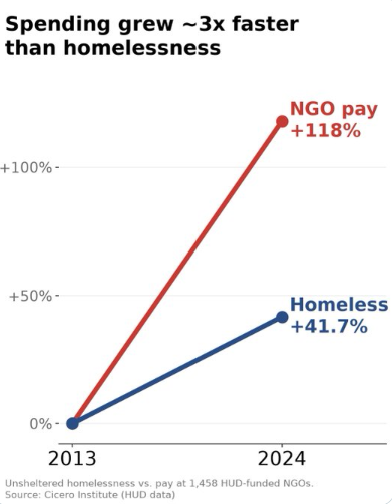
It turns out the MORE you spend fighting homelessness, the more homeless people you get. It's almost as if these organizations are being paid to generate more homeless people. Can that be?
Zillow and Thumbtack got together and determined that the hidden costs of homeownership top $16.5K/year.

In California that number is higher by 50% at $22,915. While I am not sure that property taxes and insurance are “hidden,” what interested me was the average cost of maintenance alone according to their calculations is over $15,134.
In a growing trend, Keller Williams was sued in a class action lawsuit over the $650 broker fee.

Generally, I think companies should be able to charge the fees the market will bear, in this case they are alleging that Keller Williams somehow controls the market even though they do not have the top market share. The good news is that all the press that covered this fee used the term “broker fee” and not the pejorative “junk fee” that the pro-government regulation crowd uses to justify regulating everything.
So, what should YOU do about buying or selling real estate in today's market?
If you want to move or downsize, it's still a great market to sell, but a bit more challenging than in the last few years.
Finally, if you can find a property that will give you cash flow, this is a great time to get solid cash flow and enjoy the tax benefits of real estate.
How can I help you? Call, text, or email me.
Want to know what your property would net after commissions, escrow, and other costs? Try my free Seller Net Sheet Calculator.
Bill Gross
TheLAProbateExpert.com
(310) 210-0008
bill@thelaprobateexpert.com
Real Estate Broker, DRE #01022275
eXp Realty, 8383 Wilshire Blvd., Suite 800, Beverly Hills CA 90211