Zillow Wants You to Rent Forever. How Convenient.
Zillow Says Rent. I Say Follow the Money.
10 Million More Americans. 34% Fewer Home Sales. What Broke?

If you want to understand just how fundamentally broken mainstream real estate commentary has become, you only need to look at three raw numbers: population growth, consumer demand, and housing inventory.
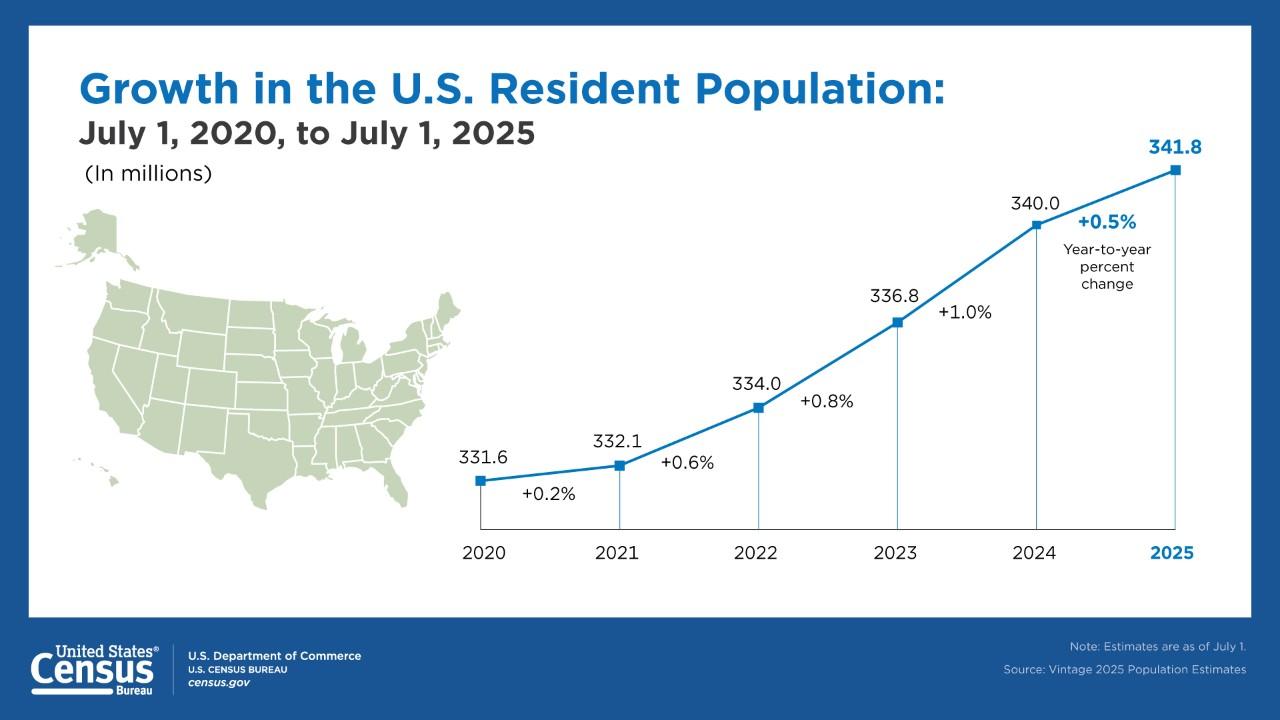
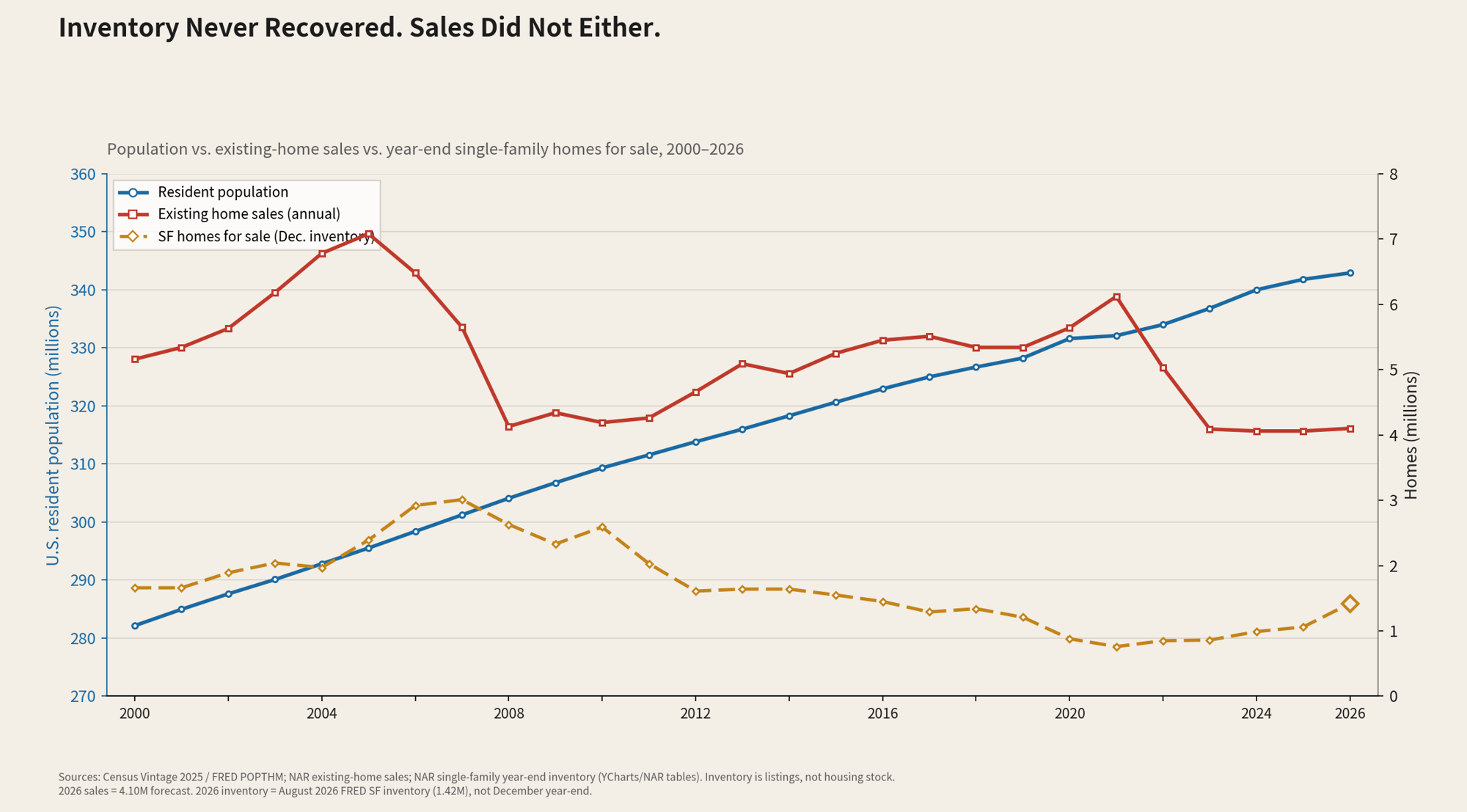
Here are the facts: Between 2020 and 2025, the U.S. population surged from 331.6 million to 341.8 million. We added over 10 million new residents to this country in just five years.
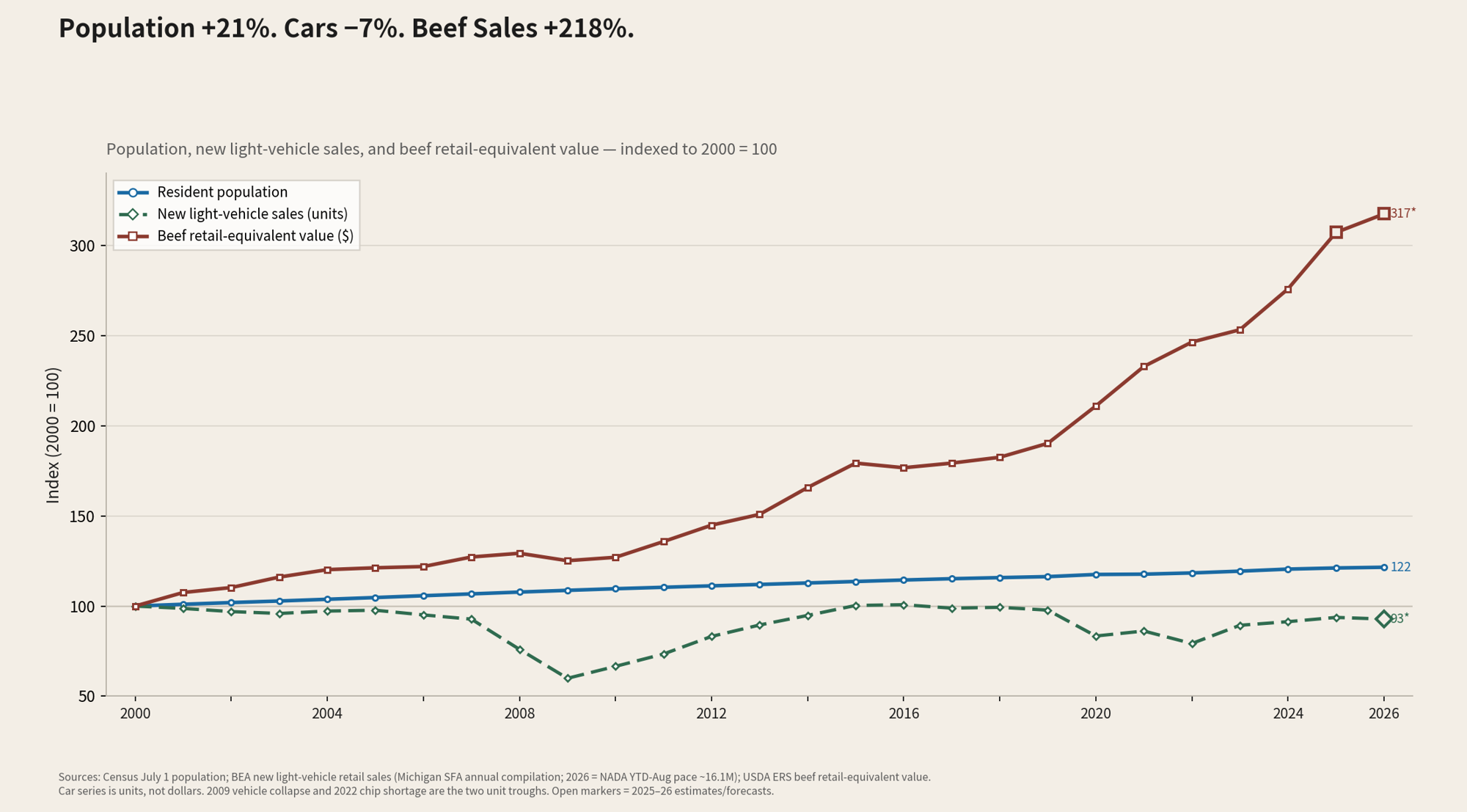
At the exact same time, consumer demand for essential goods skyrocketed. Retail beef value alone exploded by +218% indexed since 2000. People are eating, consuming, and growing.
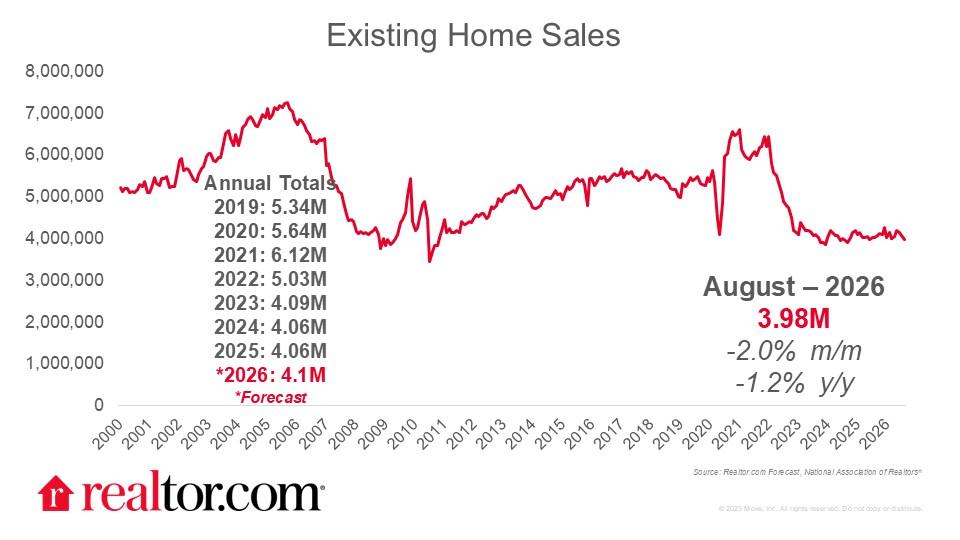
Yet, in that exact same five-year window, annual existing-home sales completely collapsed—plummeting from 6.12 million in 2021 down to a multi-decade low of 3.98 million.
Think about that disconnect for a second. In what functional economy does a nation add 10 million people, watch consumer demand for basic commodities soar, and yet see transactions for primary shelter drop by over 34%?
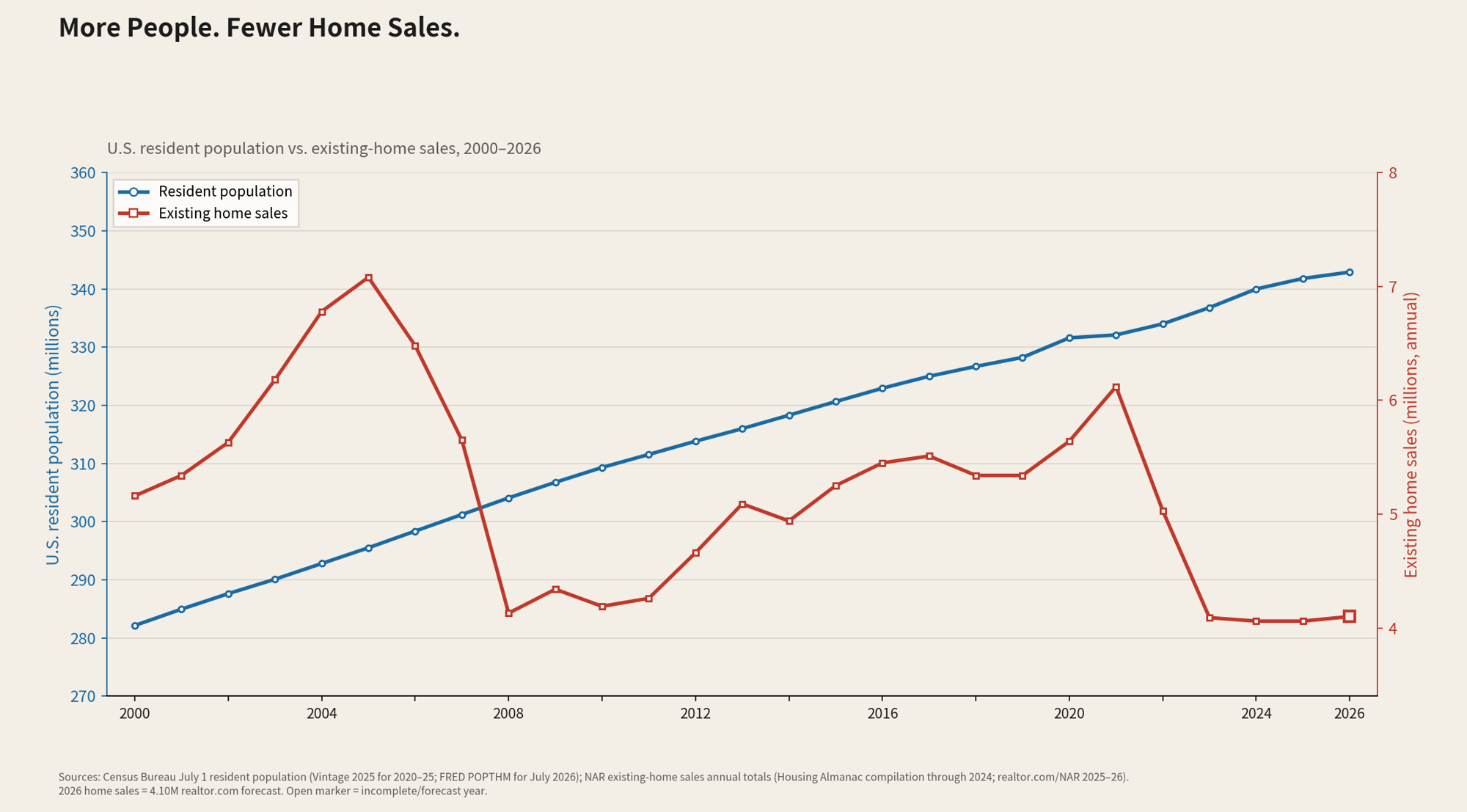
The mainstream press wants to spoon-feed you a narrative about a "buyer boycott" or a temporary interest rate glitch. Don't buy it. It is the mathematical consequence of a structural supply crisis that the corporate real estate cartels refuse to acknowledge.
The Real Culprit: We Simply Do Not Build Enough Houses
The reason home sales are depressed relative to our population size isn't that Americans have lost the desire to own a home. It's that we never rebuilt our single-family housing inventory after the 2008 crash.
Look at the historical inventory tracking:
- Throughout the early 2000s, active single-family listings hovered healthily between 2.0 million and 3.8 million units.
- By 2020, single-family inventory had dropped to 0.88 million.
- By 2025, even with the population pushing past 341 million, year-end single-family inventory sat at a pathetic 1.06 million homes for sale nationwide.
We have a country of 341 million people operating on a listing inventory that wouldn't support a nation half our size.
The fundamental problem is directly attributable to decades of chronic underbuilding, restrictive local zoning, bureaucratic red tape, and absurd government regulations that make constructing entry-level, single-family homes virtually illegal in major metro areas. When you fail to build enough homes for 10 million new residents, prices stay elevated, transactions shrink, and young families get locked out.
Enter Zillow: "You Will Own Nothing and Be Happy"
Instead of pointing out the obvious truth—that local governments and homebuilders need to dramatically expand single-family construction—corporate tech portals like Zillow have joined the globalist chorus pushing a permanent renter society.
Zillow recently rolled out algorithmic "rent vs. buy breakeven" statistics explicitly designed to convince consumers that renting is the superior financial decision. Their math claims that in many major markets, it takes 7, 10, or even 15 years to "break even" on buying a home compared to renting.
This algorithmic metric is a complete grift. Here is exactly what Zillow’s fake math deliberately ignores:
- Forced Savings & Equity Accumulation: Every mortgage payment you make includes principal reduction—an automatic savings account that builds your net worth every single month. A rent check yields a 0% return for you and a 100% equity return for your landlord.
- Fixed Housing Costs vs. Compounding Rent Inflation: A 30-year fixed mortgage locks in your principal and interest payment forever. Rent escalates with inflation, year after punishing year.
- Tax Advantages & Wealth Transfer: Homeownership remains the single largest engine of generational wealth creation and tax shelter in American history.
Why would a real estate portal promote statistics that actively discourage homeownership? Follow the money. Tech portals monetize tenant leads, partner with institutional multi-family landlords, and profit immensely when consumers stay trapped in perpetual lease cycles.
Promoting the "be happy with renting" slogan serves their corporate subscription model. It does not serve your family's financial future.
The Bottom Line
Don't let an algorithm talk you out of the American Dream. With 10 million new residents and historically low inventory, single-family homes aren't going anywhere but up in long-term value. Let's look at the real market data together—not biased propaganda.
Let's take a look at the news from this week.
My weekly overview of the housing market always starts with a look at the key demand and supply factors fundamental in any economy. The driver of demand is interest rates, and supply is measured by the homes for sale.
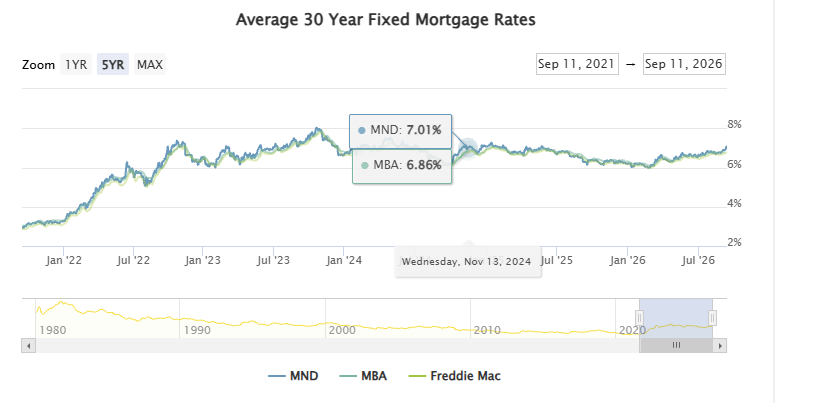
Mortgage rates closed up this week over the 7% rate for the first time this year, closing at 7.08 from 6.81 last week.
On the supply side, inventory grew in July to exceed last year's rate by about 3% or almost 22,000 more homes for sale.
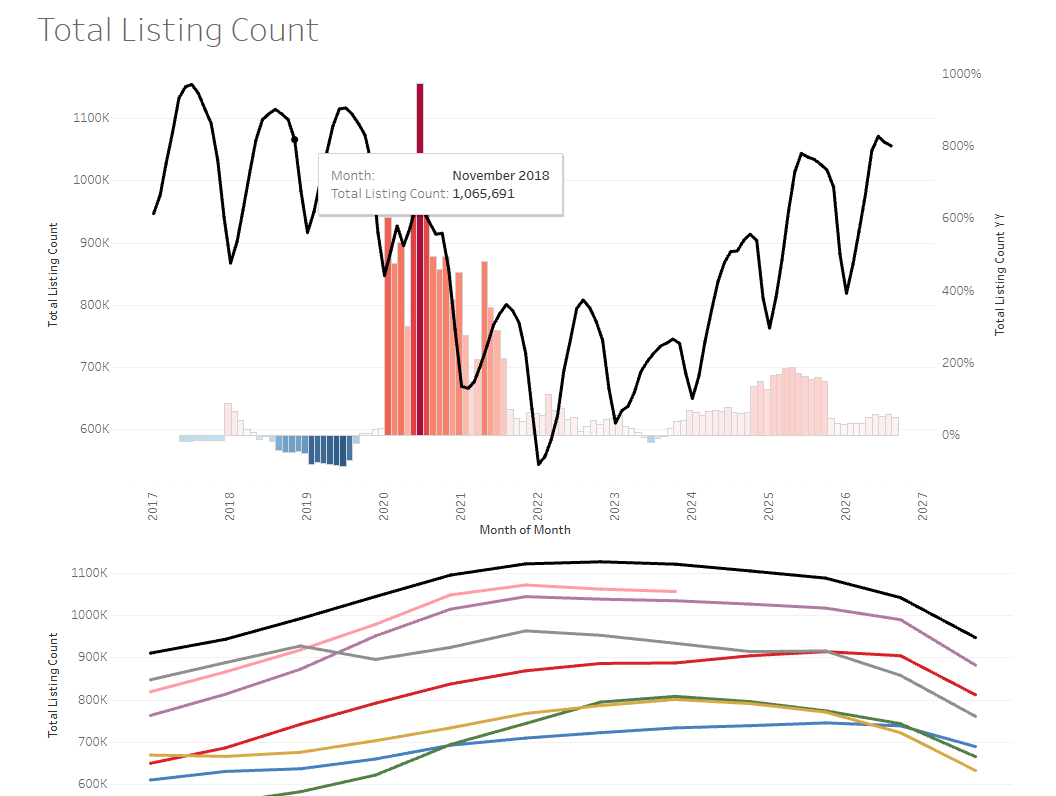
By historical standards, while inventory has increased, it is higher than any COVID year and lower than any pre-COVID year. As long as inventory remains at these levels housing prices CANNOT substantially decrease nationally, and create pressure for more home building.
All real estate markets are locally driven. While there is news nationally, our market is affected by local events and factors. In Los Angeles, our market continues to be slightly favoring sellers closed again at 35 according to Altos Market Data.
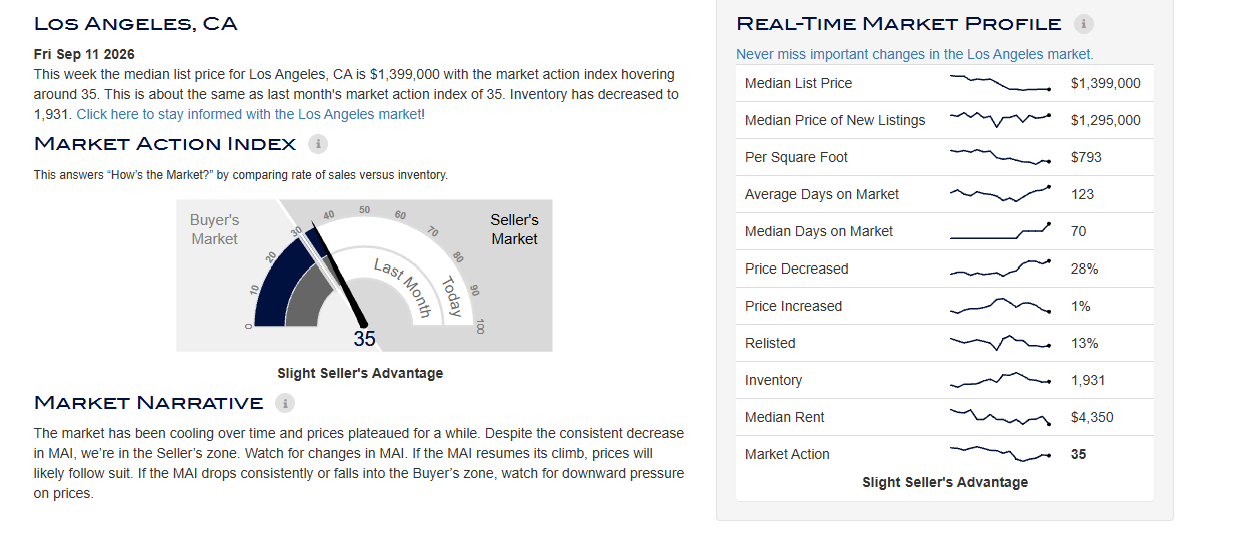
With inventory in Los Angeles growing and price per square foot dropping, this market is finally moving towards a balanced market for buyers just as the interest rates are dropping, making this the best opportunity for buyers in almost a decade.
So, in the news this week…
Are you wondering when the city will help families that lost their homes due to fires? Well, it will be a longer wait than we expected, with news last week that half, or $5 million of the original $10 million set aside for fire victims is being used to pay for rent for migrant households that claim hardships due to ICE.
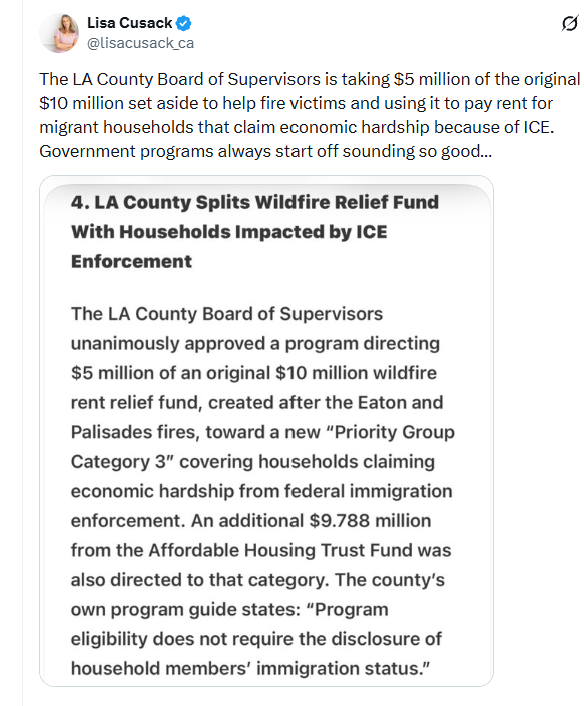
Translation: taxpayer dollars collected on the basis of helping other taxpayers is instead being given to illegal aliens who do not want to follow federal immigration laws.
Redfin tries to scare the market and hides the most telling statistics. Their headline screams that buyers are being pushed out of the market.
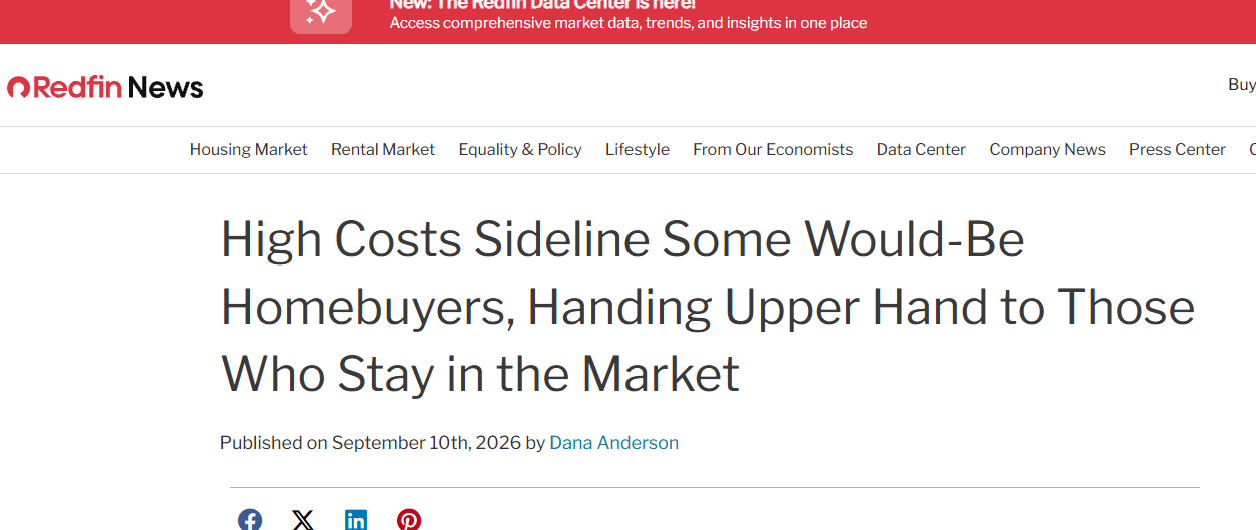
And, yet, in the article, they hide that 25.5% of homes sold went for over their asking price, up from last year. That obviously shows a competitive market for the homes that are on the market and motivated buyers getting them.
Robert Refkin, chief of company propaganda for Compass, provides another example of their propaganda, with his post emphasizing the importance of moving fast.
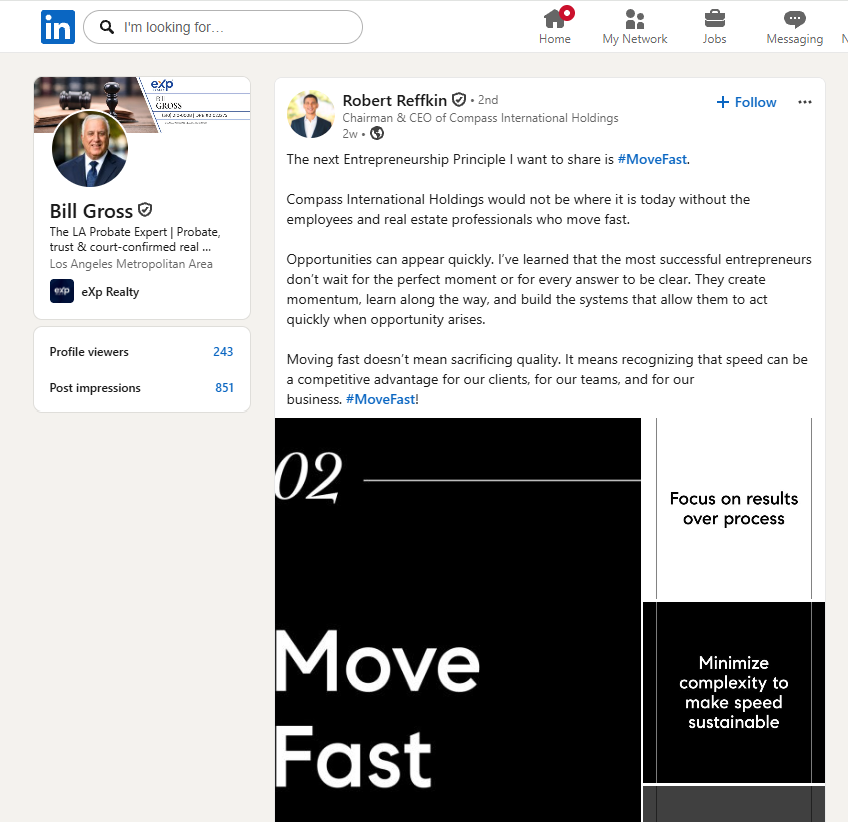
I agree that speed is a critical advantage in business. However, I think he needs to explain how hiding his customer's listings off market for 3 weeks or more BEFORE putting on the MLS accomplishes the speed to market advantage when, to me, it seems like he is surrendering it.
So, what should YOU do about buying or selling real estate in today's market?
If you want to move or downsize, it's still a great market to sell, but a bit more challenging than in the last few years.
Finally, if you can find a property that will give you cash flow, this is a great time to get solid cash flow and enjoy the tax benefits of real estate.
How can I help you? Call, text, or email me.
Bill Gross
310-210-0008
Real Estate Broker, BRE 01022275
EXP Realty, 8383 Wilshire Blvd., Suite 800, Beverly Hills CA 90211