Compass Sues Everybody! Is This a Brokerage or a Law Firm?
Compass is suing 15 MLSs. Is it still in the business of selling homes—or just suing everyone who gets in its way?

Compass is suing 15 MLSs. Is it still in the business of selling homes—or just suing everyone who gets in its way?
At what point does a residential real estate brokerage stop being a brokerage and start looking like a litigation holding company with an agent roster attached?

Consider the scoreboard: from its inception through 2026, Compass has poured an estimated $230 million to $330 million into legal fee and settlements. That includes an explicit $57.5 million to settle national broker commission antitrust lawsuits, $21.3 million resolving co-founder trade secret claims, $7 million in 2026 antitrust charges, and an estimated $38 million to $64 million just dealing with its mega-acquisition of Anywhere Real Estate. Add in tens of millions more in routine outside counsel and in-house legal salaries buried within over $1.3 billion in general and administrative overhead. In all practical terms, Compass has burned more capital funding legal battles, settling disputes, and suing industry players than it has ever retained in profits or paid in federal income taxes.
Not content with using billions in venture and Wall Street capital to disrupt incumbents and scoop up legacy brands—swallowing Anywhere Real Estate and consolidating what remains of household names like Century 21, Coldwell Banker, and Sotheby’s under its roof—Compass is now waging a multi-front legal offensive against the core infrastructure of the entire housing market.
The 15-MLS Offensive: Litigating the Rules of Engagement
Just this week, Compass followed through on threats by filing 15 federal antitrust lawsuits across eight states targeting Multiple Listing Services. The target? Local MLS rules that limit off-market and private listing promotion.

To prepare for courtroom warfare, Compass even rolled out a corporate policy barring its salaried employees and brokerage managers from holding leadership positions or board seats on Realtor associations.
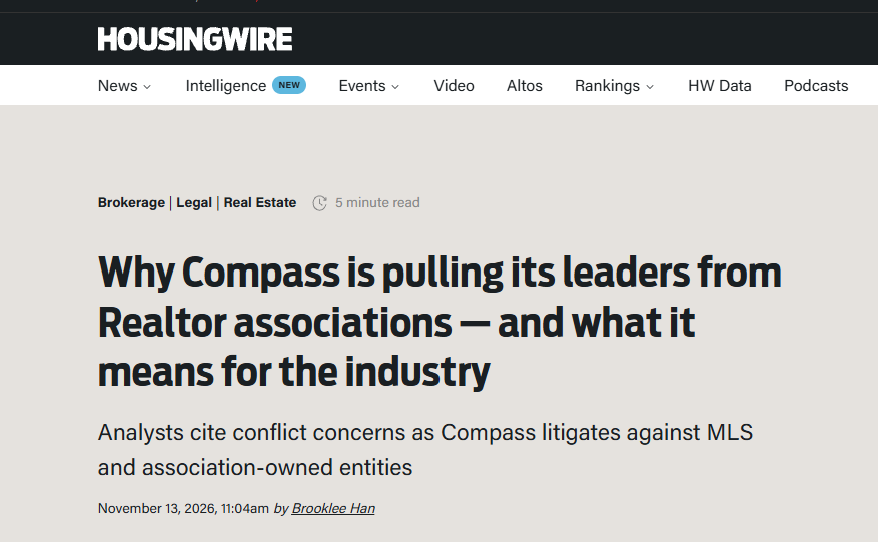
Analysts immediately recognized the play for what it is: an attempt to sanitize obvious conflicts of interest while suing the very associations that oversee local marketplaces.
When you are suing 15 MLSs across the country, sitting in their boardrooms gets awkward. It also begs the question are you the only member that does not have to follow the rules?
The "Broker-to-Broker" Charade: Sheep’s Clothing for the Wolf
Right on cue, CEO Robert Reffkin appeared on social feeds to throw sheep’s clothing over the offensive. He proclaimed a shiny new "Broker-to-Broker Cooperation Policy," adding language to the company handbook mandating that Compass agents must cooperate and share listings—even those in "Private Exclusive" or "Coming Soon" status—with all outside agents unless a client explicitly instructs otherwise in writing.
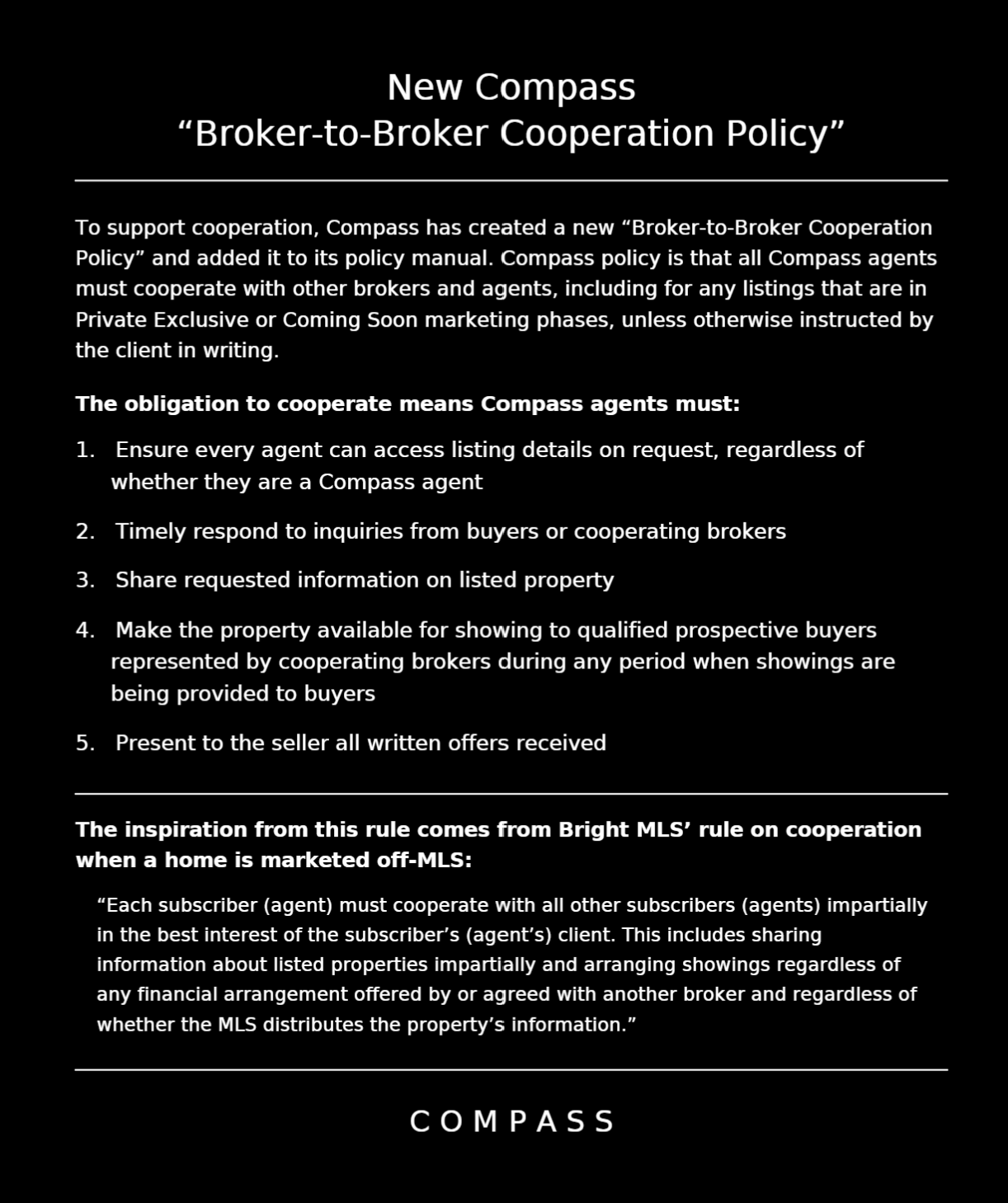
That immediately begs the fundamental question: Why does he have to change the policy now?
If cooperation was the cultural baseline all along, why did it require a top-down corporate decree in the middle of an escalating legal blitz? Who is monitoring compliance across tens of thousands of agents? How is this "cooperation" enforced when a buyer’s agent from a rival firm wants access to an off-market pocket listing? Or is this simply high-gloss virtue signaling engineered to provide cover for an antitrust campaign? He says the policy is inspired by the BrightMLS policy, so why doesn’t Compass just have all their agents join that MLS?
Reffkin himself gave away the game in his own statement. Defending why Compass won't simply put all listings straight into the MLS, he argued that the MLS "restricts how homeowners can market their homes" and complained that 45 of their top 50 MLSs restrict "Coming Soon" marketing windows or prohibit showings and offers.
Flip that math around. If 5 of the top 50 MLSs already provide the listing flexibility Compass claims sellers desperately need, why doesn't Compass simply embrace and support those systems? Why file 15 federal antitrust lawsuits to tear down existing market safeguards?
Because the objective isn’t better cooperation—it is dismantling the neutral MLS clearinghouse so that the largest mega-brokerage can control listing exposure on its own terms.
Locking In the Monopoly: From Yard Sign to Mortgage Note
If you think the strategy stops at controlling listing data, look at what is happening on the finance side.
Compass and retail mortgage giant Rate announced a consolidation of their joint ventures—merging Guaranteed Rate Affinity and OriginPoint under the OriginPoint banner.

The unified lending platform unites 672 dedicated loan officers aiming for $13.2 billion in mortgage volume. Crucially, this operation plugs straight into Compass’s network of more than 80,000 agents, funneling buyers directly from Coldwell Banker, Sotheby’s, and Compass open houses into proprietary in-house financing.
This is the full-stack walled garden in action:
- Roll up competing brokerages with Wall Street capital.
- Attack MLS cooperation rules in federal court.
- Proclaim "cooperation" while hoarding listings behind private marketing exemptions.
- Funnel the resulting pipeline into an integrated, $13.2 billion mortgage lending machine.
The industry needs to see this playbook for what it is. It isn’t an altruistic crusade for "agent choice" or "seller freedom". It’s an aggressive effort to break down independent market guardrails and replace an open, cooperative MLS ecosystem with a consolidated corporate tollbooth.
The questions homeowners and buyers and real estate agents have to make is are these legal battles good for them or just good for Compass? To date, with all this, Compass still is a huge net loss financially, will they crash the ship and take down the entire industry with it?
Let's take a look at the news from this week.
My weekly overview of the housing market always starts with a look at the key demand and supply factors fundamental in any economy. The driver of demand is interest rates, and supply is measured by the homes for sale.
In a crazy week of financial turmoil, this week mortgage rates jumped up about three-eights of a percent (0.375%), closing at 7.50 from last week’s 7.17%.
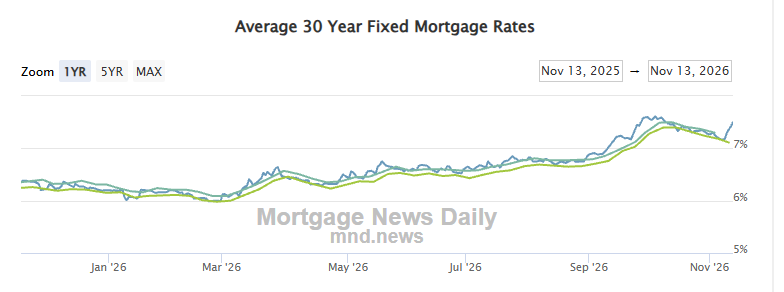
It appeared that we were on our way to recovering from the increases since summer, but the events surrounding NVDIA and the credit markets have turned that around.
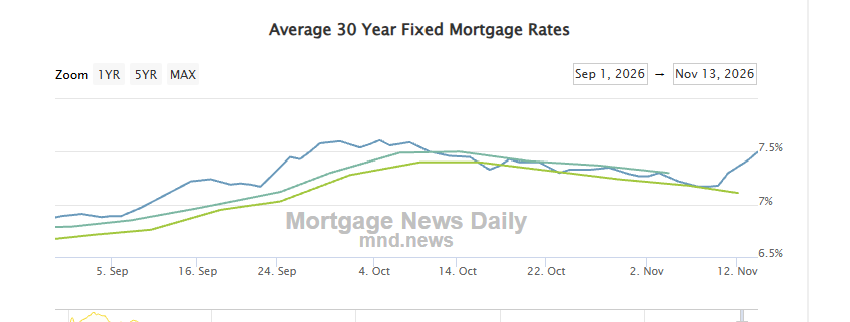
These rates, while causing pain for home builders and 1st time buyers, have not and will not significantly slow purchases as the smaller percentage of the population that can afford to buy a home is doing well.
On the supply side, inventory grew in October to exceed last year's rate by about 7% or almost 83,000 more homes for sale.
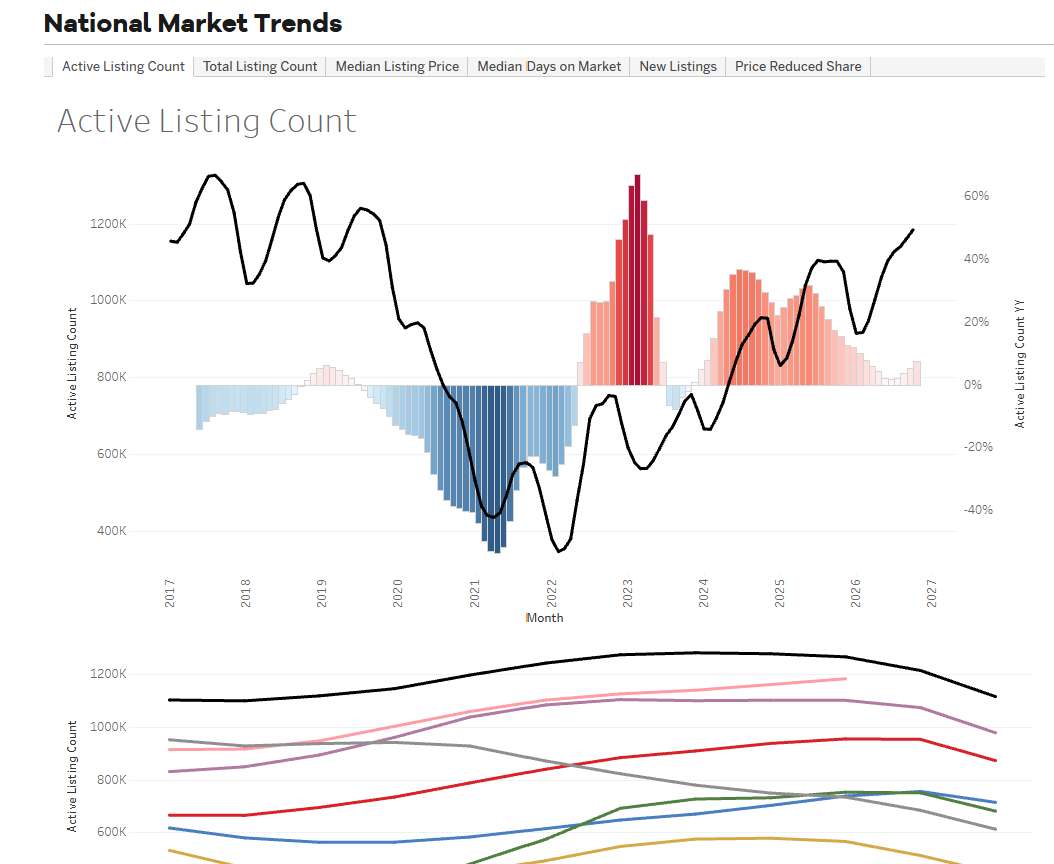
By historical standards, while inventory has increased, it is higher than any COVID year and lower than any pre-COVID year. As long as inventory remains at these levels, housing prices CANNOT substantially decrease nationally, and this creates pressure for more home building.More importantly, this will help stabilize prices so that if rates do continue to drop there will be more homes for sale and reduce price pressure.
All real estate markets are locally driven. While there is news nationally, our market is affected by local events and factors. In Los Angeles, our market continues to move slowly towards a balanced market, closing this week again at 34 according to Altos Market Data. This is the closest to balanced the market has been in Los Angeles since before COVID.
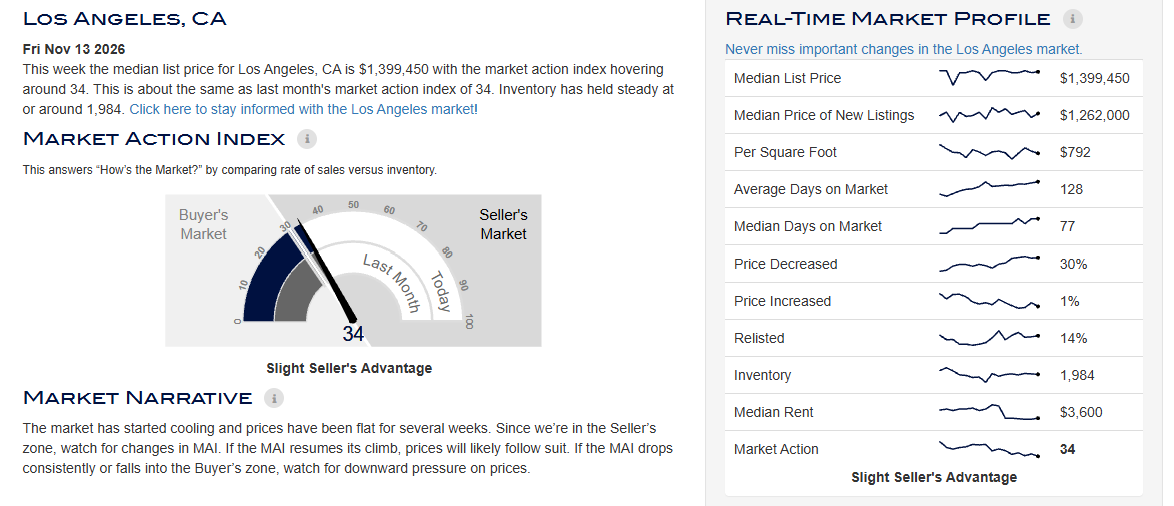
With inventory in Los Angeles growing and price per square foot dropping, this market is finally moving towards a balanced market for buyers just as the interest rates are dropping, making this the best opportunity for buyers in almost a decade.
So, in the news this week…
While rates are increasing and the number of sales is decreasing, the value of homes in Southern California continues to hold or increase.
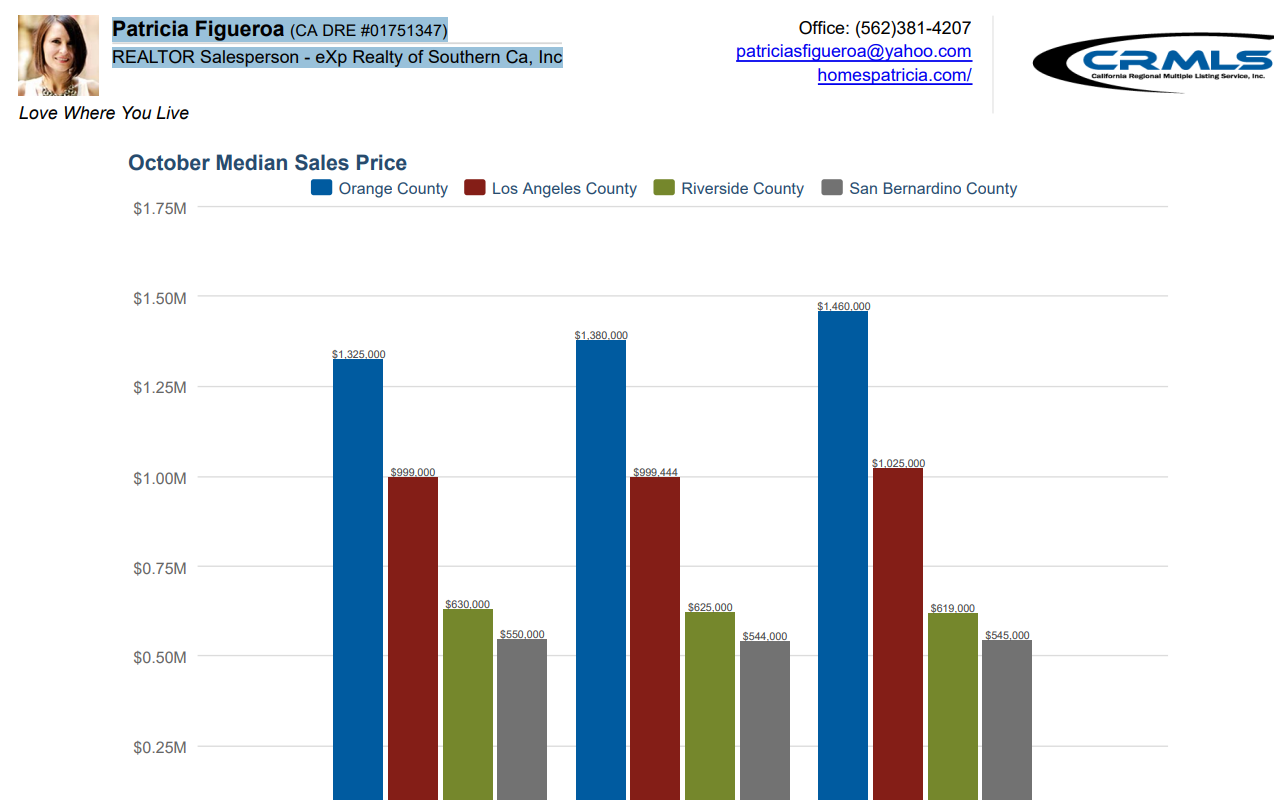
According to a report from my EXP colleague Patricia Figueroa, the average sales price increased in Orange County year over year, increased slightly in Los Angeles, but dropped slightly in both San Bernardino and Riverside counties. All show housing prices increasing less than wages and incomes, which helps affordability.
Nationally, existing home sales continue to deteriorate from its historic depression levels, dropping 5.5% year-over year to an annual rate of 3.75 million in the month of October, to the lowest rate since the depths of the Global Recession 2010 despite the population, made worse by the fact that the population is now 10% higher.
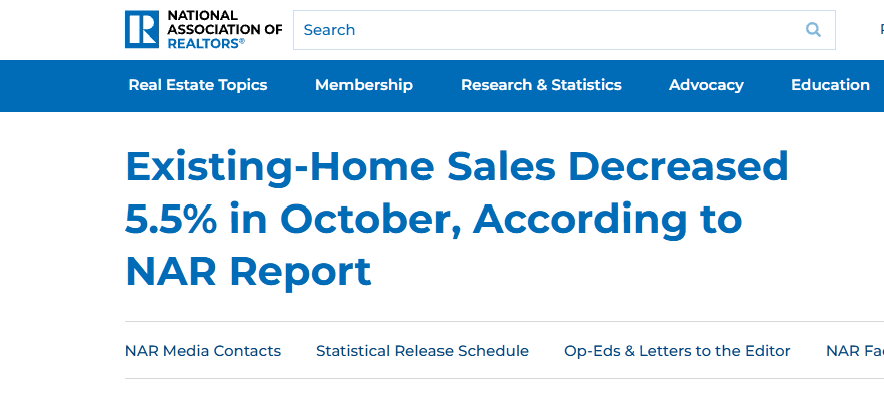
Funny to see the press ask Zillow CEO for a comment, and he says “its one of the toughest housing markets in a generation.”

Another way of saying the housing market has reached its worse levels at the same time that Zillow’s monopoly on the portal side has grown to its maximum power. The obvious connection is taking away human beings from helping customers results in a lower standard of service. I also remember when I was in the real estate market a large number of the agents and mortgage representatives were also customers, yet today the money in the real estate industry flowers increasingly to Wall Street Investors, Zillow and Compass shareholders instead, as they “disintermediate” employees and businesses they “compete with.”
In more Zillow news, not content with the level of destruction their selling leads to unwitting buyers has wrought, they are increasingly demanding a larger percentage of the commission from buyers real estate agents, again replacing local businesses with its investors and shareholders.

I remember when Zillow was an independent source of information in real estate, not its just a money-grubbing internet monopoly fooling customers into thinking they are contacting the listing agent (see prior blog posts) and demanding commission dollars while not being held to the responsibilities to the customer.
Finally, in Los Angeles real estate history news, the studio where Seinfeld was shot is being sold at foreclosure auction.
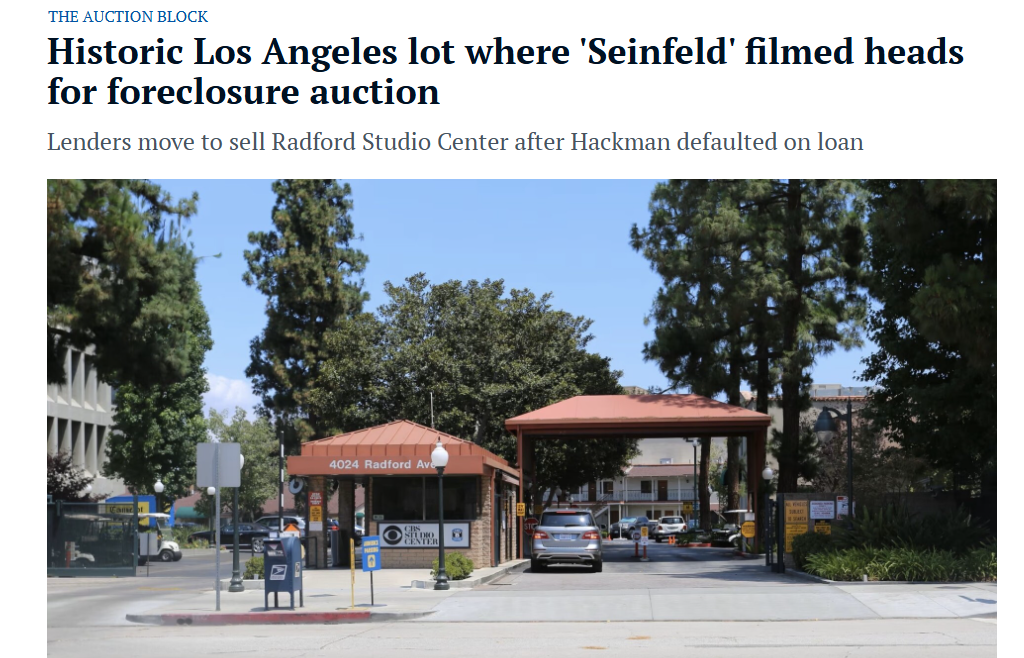
According to CoStar, the Radford Studio Center, home to 22 soundstages in Studio City, is scheduled for a foreclosure auction Nov. 24. This is another sign that movie and television production continues to leave Los Angeles which impacts the entire market.
So, what should YOU do about buying or selling real estate in today's market?
If you want to move or downsize, it's still a great market to sell, but a bit more challenging than in the last few years.
Finally, if you can find a property that will give you cash flow, this is a great time to get solid cash flow and enjoy the tax benefits of real estate.
How can I help you? Call, text, or email me.
Bill Gross
TheLAProbateExpert.com
(310) 210-0008
bill@thelaprobateexpert.com
Real Estate Broker, DRE #01022275
eXp Realty, 8383 Wilshire Blvd., Suite 800, Beverly Hills CA 90211