Blog · Market note · Sep 5, 2026 · 8 min
The $14 billion bully: how Compass sued to crush a local MLS
A $14.5 billion brokerage sued a $14.6 million member-owned MLS. The August 2026 NWMLS settlement is what happens when litigation cost is the strategy.

Maximum public exposure on the open, cooperative MLS is still the reliable way to drive competitive bidding and maximize property value. When a venture-backed brokerage decides cooperative rules conflict with its model, it chooses litigation over negotiation.
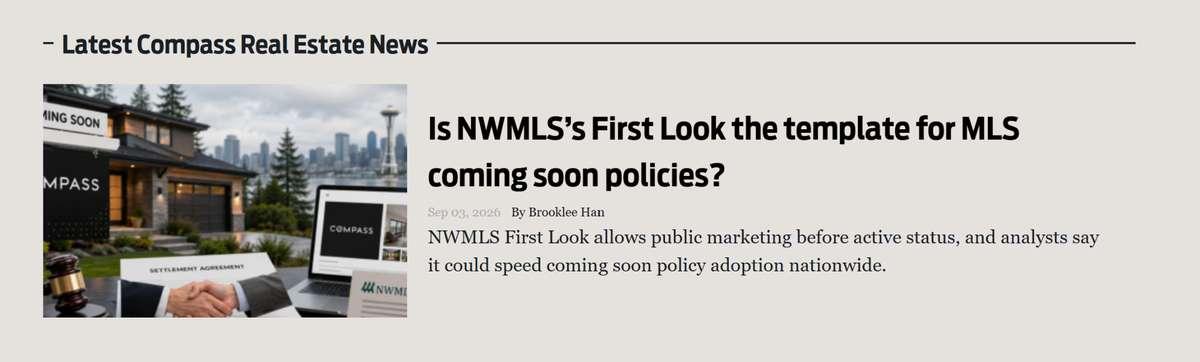
The August 2026 settlement between Compass and the Northwest Multiple Listing Service shows how corporate capital can rewrite local rules. Coverage is already treating it as a template other markets will be asked to copy.
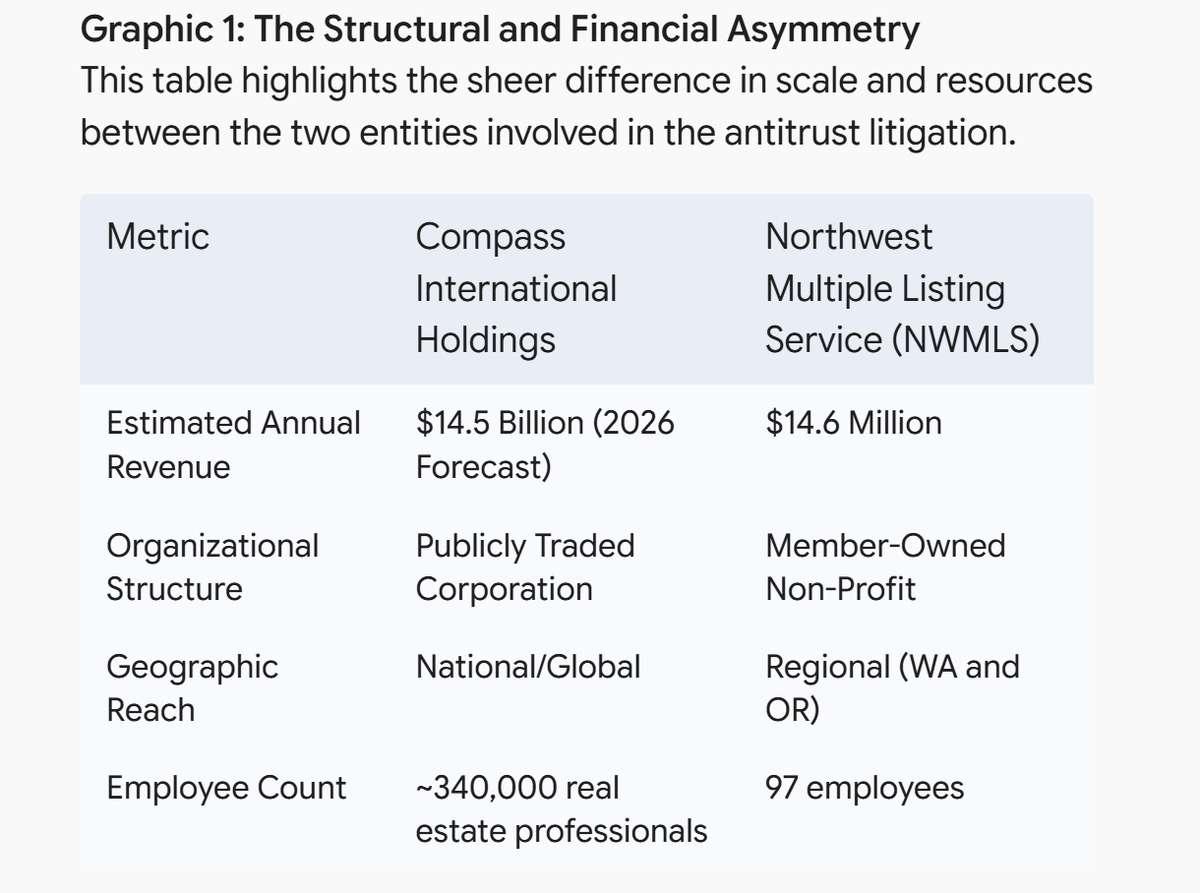
The imbalance is the point. Compass is a public company with a 2026 revenue forecast around $14.5 billion and hundreds of thousands of agents. NWMLS is a member-owned non-profit on roughly $14.6 million a year with fewer than 100 employees, running a marketplace for about 30,000 regional brokers. When the larger entity files federal antitrust claims, defense cost itself becomes leverage.
The fight started with Compass’s “Private Exclusives” program and NWMLS Rules 2 and 4 — the rules against closed off-market networks and the one-business-day public listing requirement. Compass did not take that through ordinary governance. It ran off-market, treated fines as operating expense, and sued in federal court after NWMLS briefly suspended the data feed.

The Sherman Act filing called the cooperative a monopoly. An MLS is shared data among competing firms. Withholding listings inside a private network is not liberalization. It is control of supply. When a brokerage sits on both sides of a deal it keeps the full commission. In Washington, D.C., where Compass has held about 39.5% share, its dual-agency rate has been reported around 41%.

NWMLS settled in August 2026. Changes took effect September 4. “First Look” lets a property be marketed and shown for 21 days while Days on Market and price history stay off public portals. California’s CRMLS still restricts showings in Coming Soon so the house is not shopped off-market before full exposure. The settlement also limits NWMLS discipline of Compass agents under state rules.
Pushing inventory back into private networks is a Fair Housing problem, not just a brokerage-politics problem. Bright MLS and Drexel work has put the cost of withholding a property from the open market at about 17.5% of sale price. An estate with a fiduciary duty should not treat that as a branding choice.
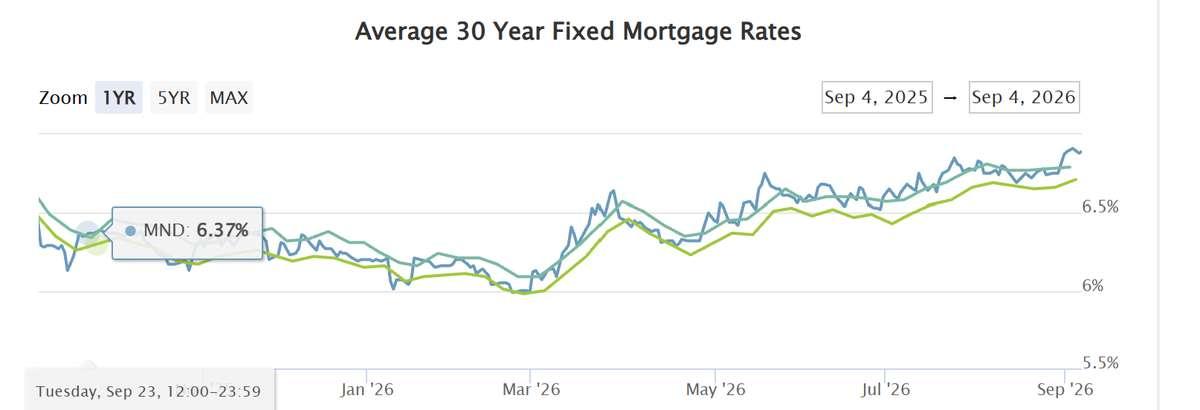
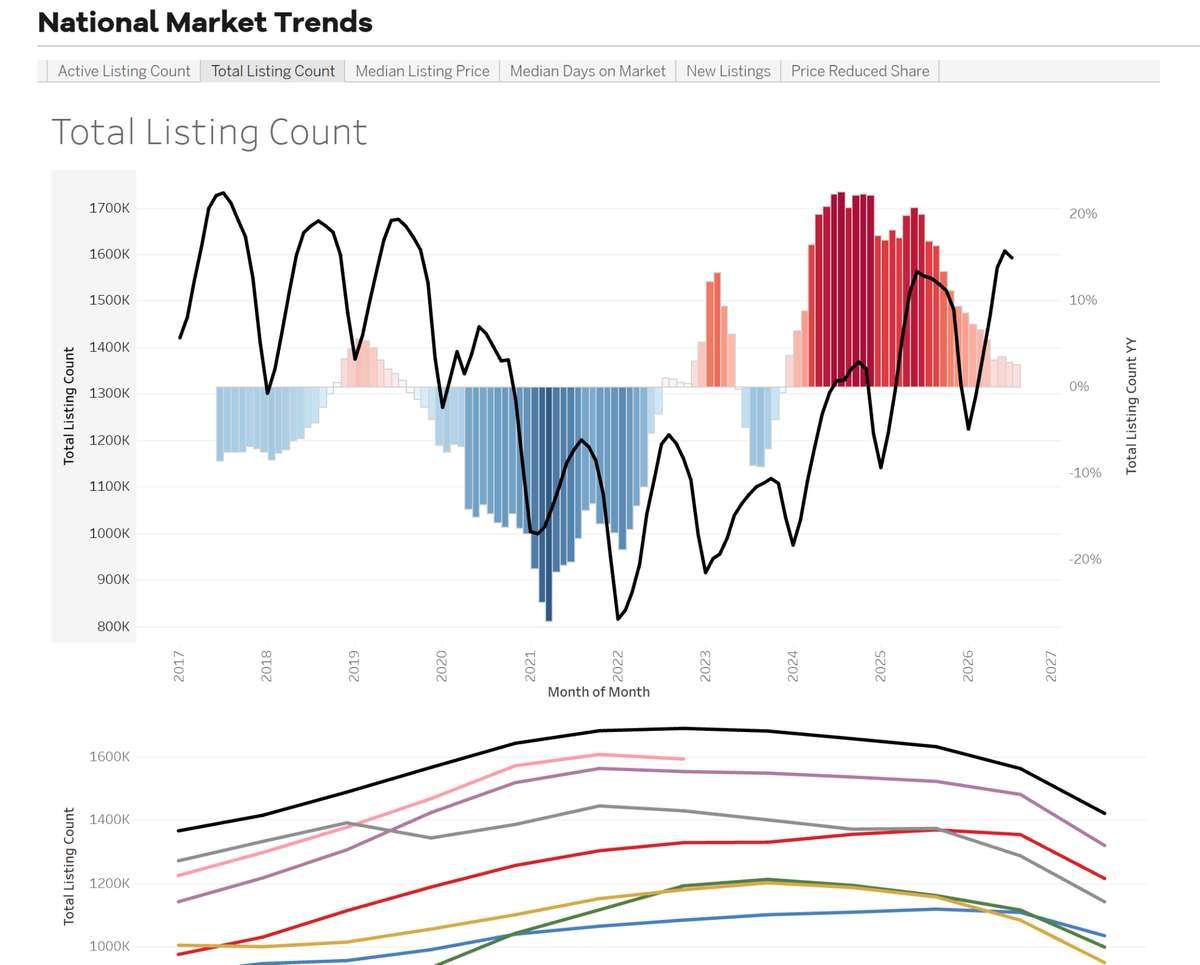
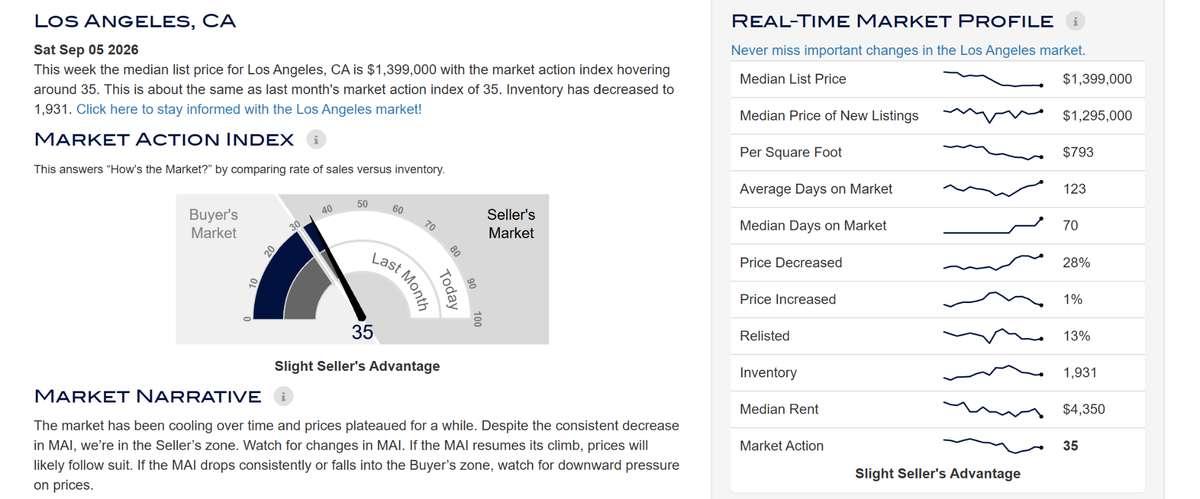
This week’s tape: mortgage rates around 6.81%. Inventory in July ran about 3% above last year — roughly 44,000 more homes. That is higher than any COVID year and still lower than the pre-COVID years. National prices do not fall in an orderly way on that stock. Los Angeles, on Altos, is still a slight seller’s tape at 35, with inventory up and price-per-foot softer — closer to balance as rates have stopped climbing.

Redfin hired a new CEO out of Intuit and Meta. That is a systems resume, not a local-market one. In Los Angeles, Justin Szlasa was removed as chair of an LAHSA audit committee after pushing for an accounting of homeless spending. In the Bay Area, AI liquidity is being written up as a mansion shortage. None of that changes the file on a vacant inherited house.

If you want to move or downsize, it is still a market in which you can sell — slower and more technical than 2021. If you can find cash flow, the tax and basis conversation still matters. Estates should not wait for a brokerage lawsuit to decide whether the house gets a real market.
Educational only. California probate and trust administration are fact-specific. Confirm authority, court requirements, and tax consequences with the estate’s attorney and tax advisor. See the California Probate Code.