7.28% Mortgage Rates Change the Housing Math
Mortgage rates are back at 7.28%. Home prices haven’t changed much—but the monthly payment has. Here’s what the new math means for buyers and sellers.

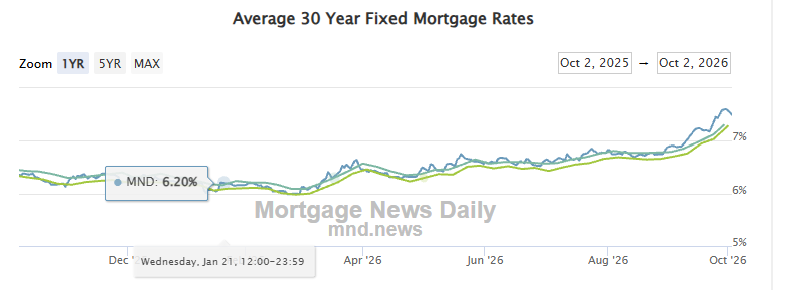
Mortgage rates just jumped hard, and that changes what a house costs every month. The average 30-year loan hit 7.28% on October 1. That is up a quarter of a point in one week, the biggest one-week jump in about four years, and the highest weekly average in nearly three years. A week earlier it had already crossed 7% for the first time since early 2025. The rate a buyer actually gets on the phone is often higher than the headline number. Some daily quotes late last week were between about 7.4% and 7.6%. If you are still using last month’s rate, the payment you are quoting is already wrong.
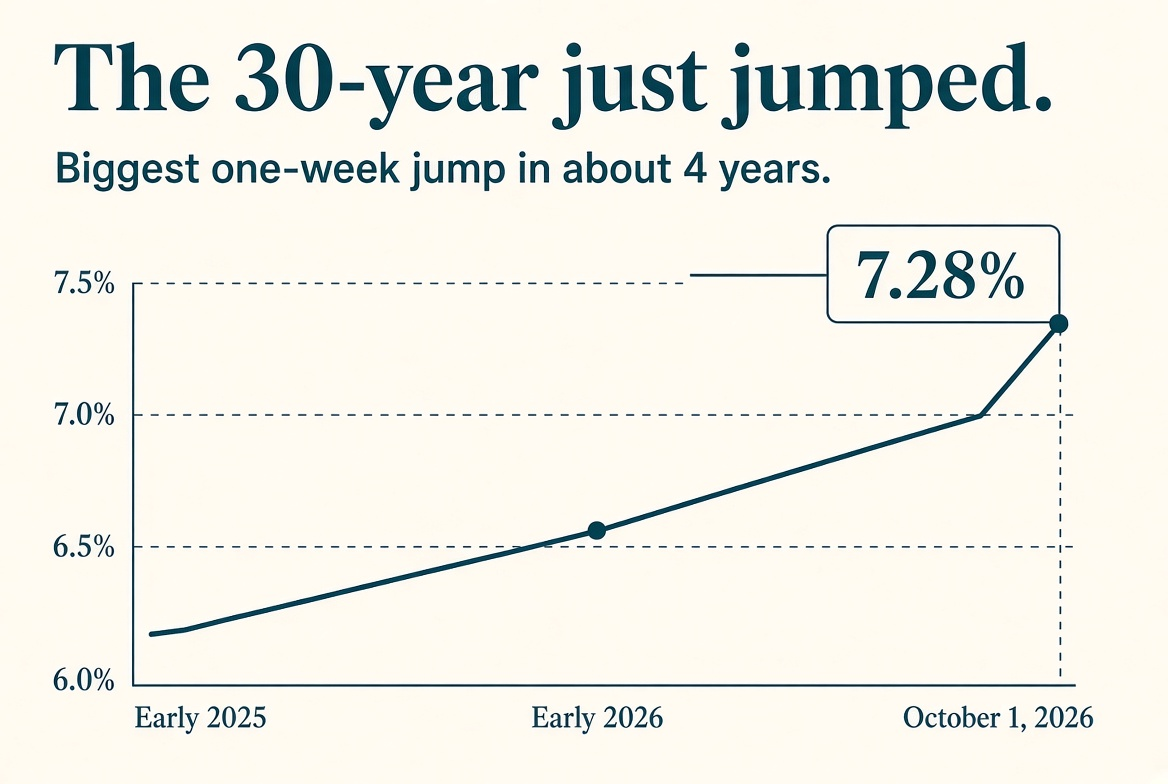
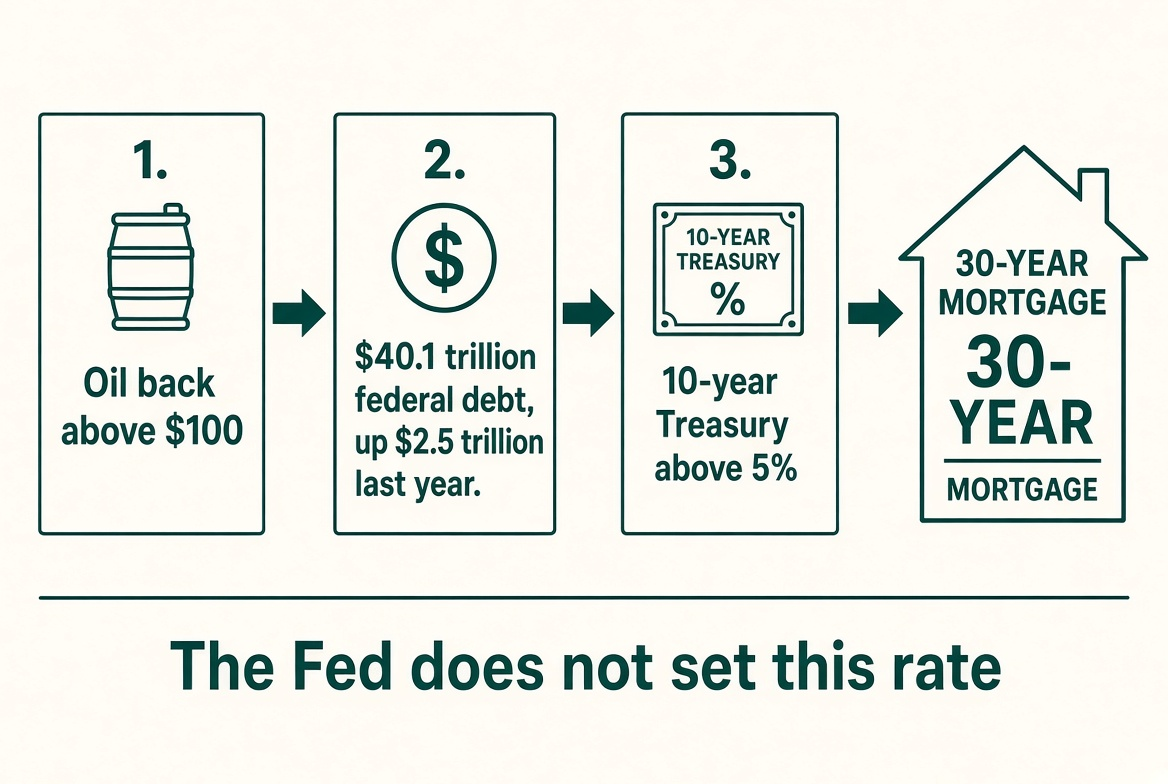
Rates did not jump because the Federal Reserve raised them this week. Home loans follow longer-term government bond rates, mainly the 10-year Treasury, and that rate has pushed above 5%, the highest in about 20 years. Two things are pushing it. Oil is back above $100 a barrel because of the war with Iran, and investors worry higher energy costs will keep prices rising. The bigger, slower problem is the federal debt. It closed the fiscal year on September 30 at $40.1 trillion, the first year-end above $40 trillion, after adding $2.46 trillion in that one year, about $6.7 billion a day. Debt held by the public, the part sold into the bond market, is $32.4 trillion. Washington has added debt at a record pace for five years, and neither party has a plan that stops it. Gridlock is the forecast. Government funding expires December 11. The debt ceiling itself, now $41.1 trillion, is not the December fight. Outside estimates put the next ceiling crunch in 2027. Bond buyers do not see a deal coming either way, so they demand a higher rate to keep lending. A Fed cut does not fix that. This morning’s jobs report was weak, only 29,000 jobs added and unemployment at 4.2%, and bond rates eased a little. That is not a reversal.
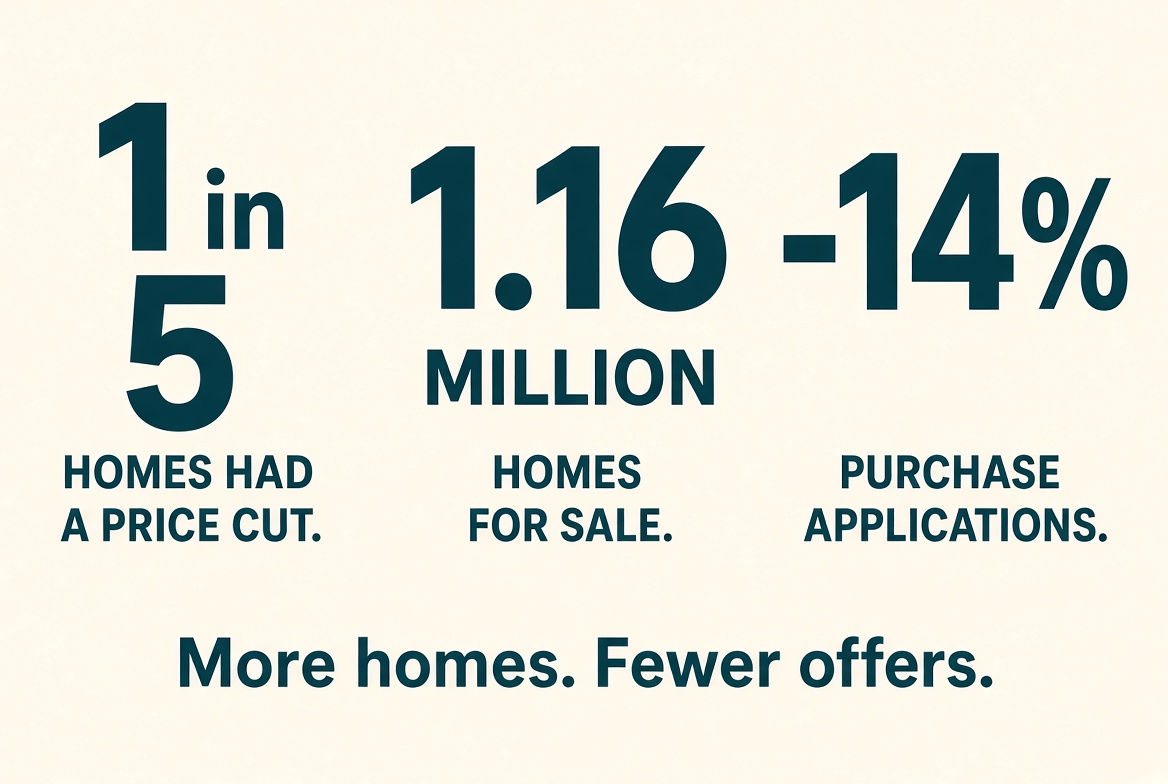
The housing numbers already show buyers pulling back. In September, about 1 in 5 homes for sale had a price cut. That is the highest share in nearly four years. More homes are on the market than a year ago, about 1.16 million, and the gap with normal pre-pandemic inventory is the smallest it has been in this recovery. Sellers are not flooding the market. New listings were basically flat. Homes are lasting longer because fewer buyers are writing offers. Homes under contract were down about 4% from a year ago. Applications for a purchase loan were down 14%. Refinance applications were down 56%. Some trackers also show more deals falling apart, at the highest cancellation rate since 2022. The typical asking price was about $419,000, down a little from last year, but still far above 2019.
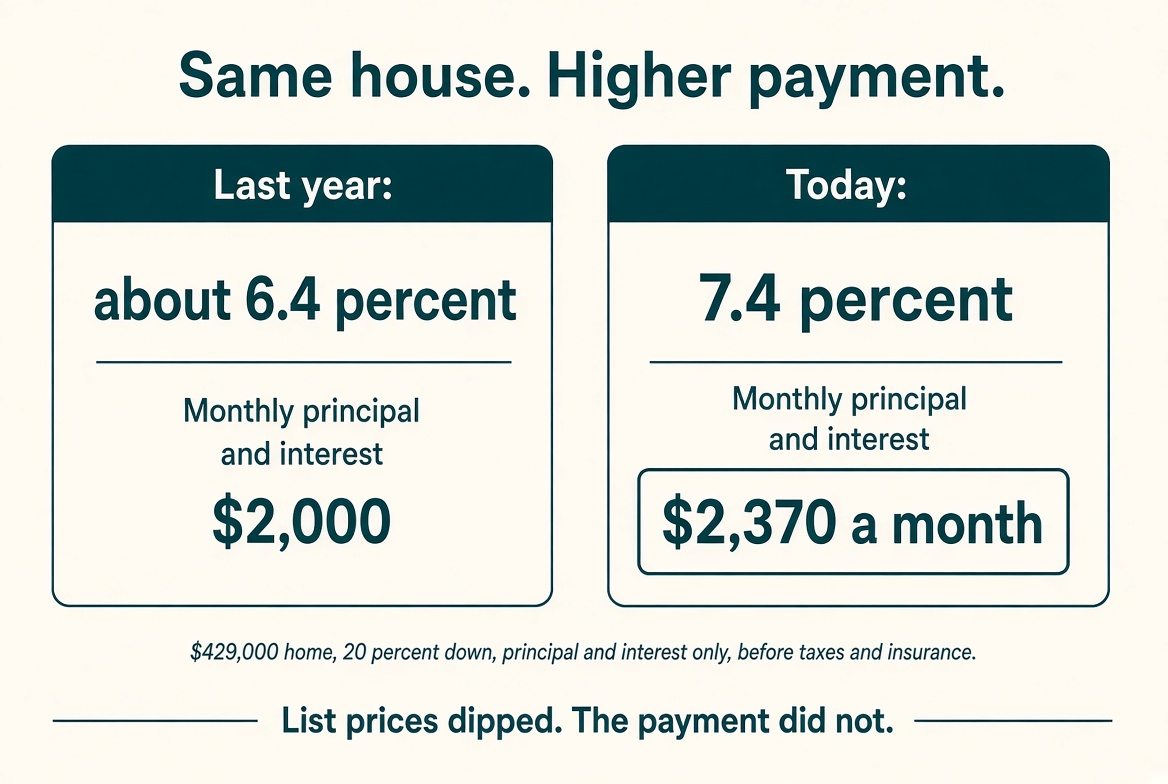
Here is the split that matters. Houses that are already closed are not much cheaper. August sales were the slowest in more than a year, and the typical sold price was still up from a year ago, at about $429,000. Asking prices are the ones bending. The rate move over the past year adds more than $200 a month to the loan payment on a typical home, even though list prices are down. At about 7.4% with 20% down, the loan payment on a $429,000 house is roughly $2,370 a month before taxes and insurance. Sellers who priced the house for a lower rate are the ones cutting. Buyers who can still qualify have more choices and more room to negotiate. Many are not using it, because the monthly payment fails before they ever tour the house.
Price and negotiate off today’s rate, not off the hope that one weak jobs report or a December funding deal fixes this. If you are selling, set the price for a buyer who has to borrow at roughly 7.3% to 7.5%, not for what a neighbor got in June. If the seller will not, the market is already doing it: 1 in 5 listings took a cut in September. If you are buying, run the payment on the rate you will actually be offered, then look at the price cuts and seller help already showing up. Some buyers are using adjustable loans because the 30-year payment does not work. That is a product choice, not a bet that rates will crash next month. The monthly payment is what decides whether the deal happens.
So what should you do?
If you are buying, get the lock before you tour. Run the payment at 7.3% to 7.5%, then decide if the house still works. If you are selling, price to that payment, not to the neighbor’s June close, and put the house on the cooperative MLS so the cut happens in public, not in a private pocket. If you are the agent, stop reading portal banners to your client. Quote the payment, the price-cut share, and the pending drop, and put the advice in writing. If you are the attorney, do not let a listing price get set off last spring’s comps while the loan that has to clear it costs $200 more a month. If you are the executor or administrator, the estate does not get to wait for Washington. A December funding fight is not a rate cut, the debt is $40.1 trillion, and carrying costs, insurance, and taxes do not pause. Price it so it sells at today’s payment, confirm the sale on the open market, and get the order. The monthly payment decides the deal. Act on that, or the market will act for you.
Let's take a look at the news from this week.
My weekly overview of the housing market always starts with a look at the key demand and supply factors fundamental in any economy. The driver of demand is interest rates, and supply is measured by the homes for sale.
We discussed rates in detail already…
On the supply side, inventory grew in July to exceed last year's rate by about 3% or almost 37,000 more homes for sale.
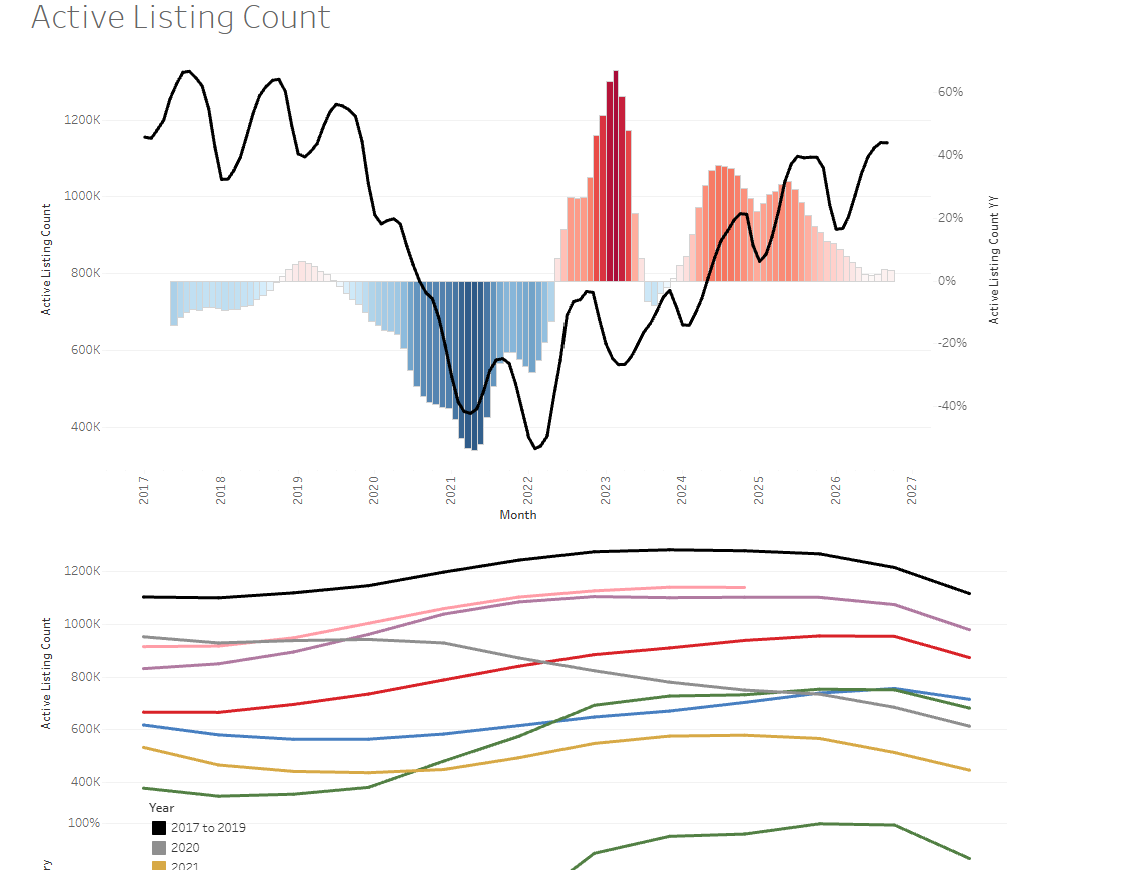
By historical standards, while inventory has increased, it is higher than any COVID year and lower than any pre-COVID year. As long as inventory remains at these levels housing prices CANNOT substantially decrease nationally, and create pressure for more home building.
All real estate markets are locally driven. While there is news nationally, our market is affected by local events and factors. In Los Angeles, our market continues to be slightly favoring sellers closed again at 35 according to Altos Market Data.
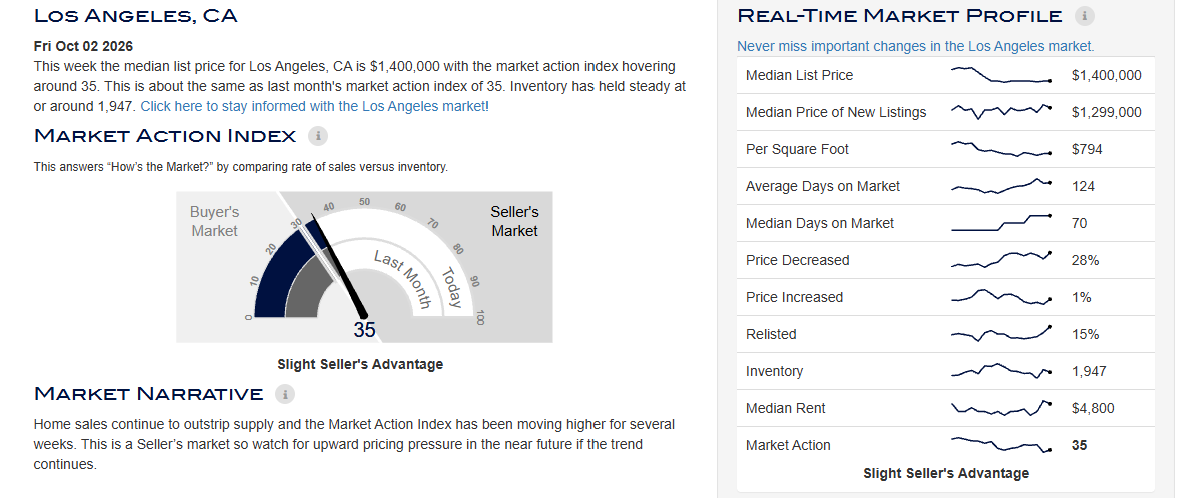
With inventory in Los Angeles growing and price per square foot dropping, this market is finally moving towards a balanced market for buyers just as the interest rates are dropping, making this the best opportunity for buyers in almost a decade.
So, in the news this week…
The Federal Government broke the credit score monopoly that has existed for 40 years, allowing lenders to choose credit vendors OTHER than Fair Isaac, or the FICO score.

While the savings is only about $100 per home loan, its a start and points in the right direction that large monopolies should not keep all the benefits of technology but in a healthy economy the benefits of technology should help everyone save money.
Compass’s CEO continues to bully the industry, last week taking aim at the local Multiple Listing Services by “demanding” that their information not be shared with certain data companies that Compass does not like.

With a big smile, this guy is both demanding and suing real estate agents across the county to prevent them from selling our data, the sales of which allows us to keep the price lower. While Compass’ CEO does not care what the MLS membership costs individual agents because his stated goal is to both destroy and replace them, those of us not ready to work for Compass appreciate effectively monetizing our work to help us save money, too. In particular, he wants to restrict sharing the data with companies that may use it to recruit his agents, but what that also does is limit the value of work his agents accumulate so he can keep them at a lower cost and lower service than the healthy competition in today’s market. Agents at Compass should be offended at this backhand way to disempower them.
While not as glamorous or without the same worship from the compliant press, one of the largest MLS organizations in the US, CRML based in Southern California (I am a member of its competitor CLAW) issues a great statement defending their position on how they are defending the power of both real estate agents and consumers.

They properly point out that Sellers already have choices about how their properties are marketed, including options for those who do not want their listings publicly marketed. Their principle, however is once a property is marketed publicly, CRMLS believes cooperating brokers and their clients should have equal access to that listing information. Seems fair and clear to me.
Realtor.com ranked the 100 top metro areas for affordability and ability to build new homes, and it surprising how mixed the results are nationally.
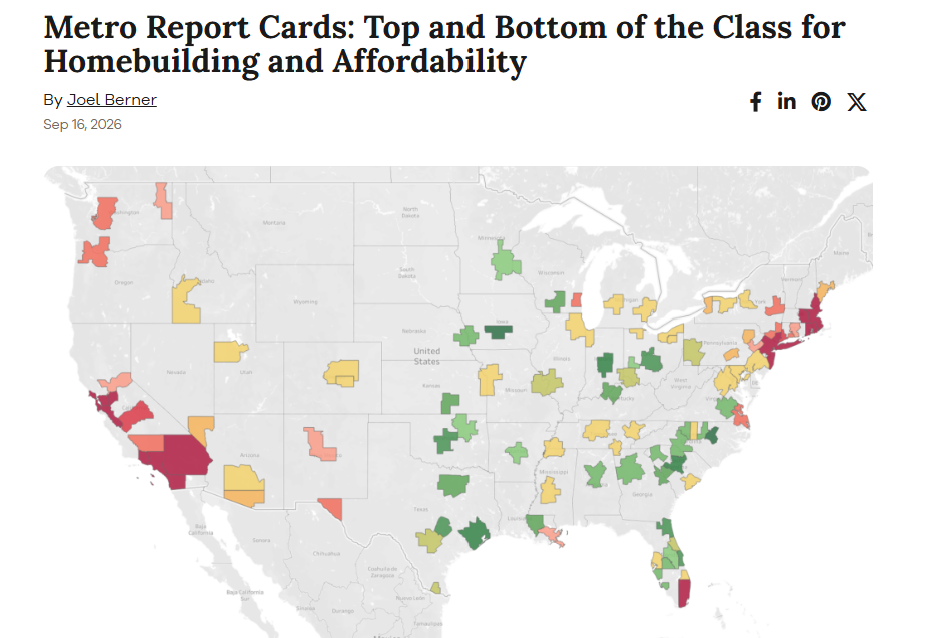
And guess where Los Angeles ranks?
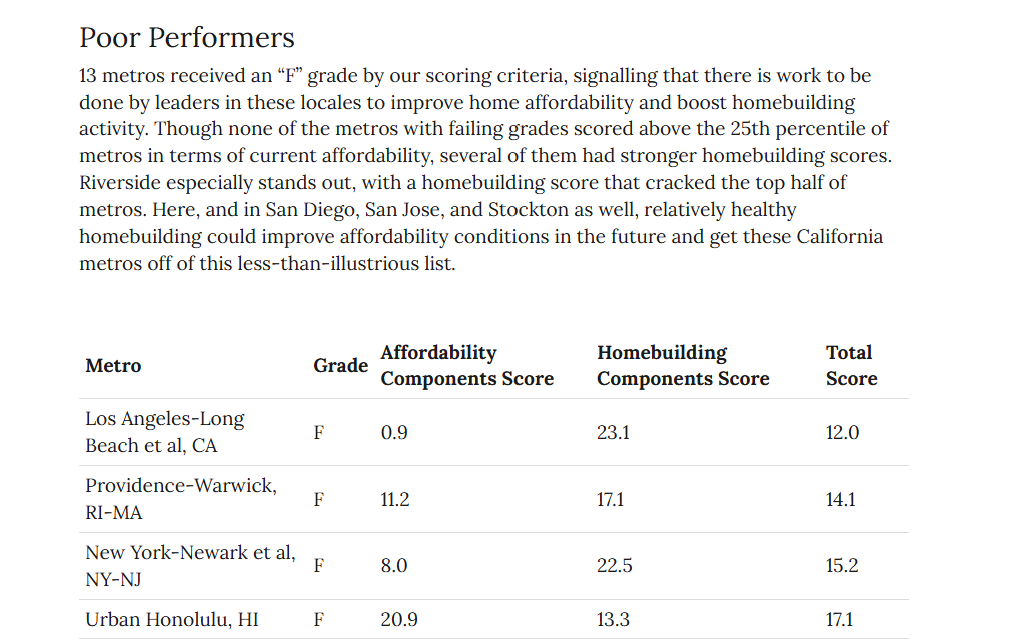
Reminds me of the line in Animal House: "Fat, drunk, and stupid is no way to go through life, son"

Link to the clip here: https://youtu.be/bK-Dqj4fHmM
So, what should YOU do about buying or selling real estate in today's market?
If you want to move or downsize, it's still a great market to sell, but a bit more challenging than in the last few years.
Finally, if you can find a property that will give you cash flow, this is a great time to get solid cash flow and enjoy the tax benefits of real estate.
How can I help you? Call, text, or email me.
Bill Gross
TheLAProbateExpert.com
(310) 210-0008
bill@thelaprobateexpert.com
Real Estate Broker, DRE #01022275
eXp Realty, 8383 Wilshire Blvd., Suite 800, Beverly Hills CA 90211